
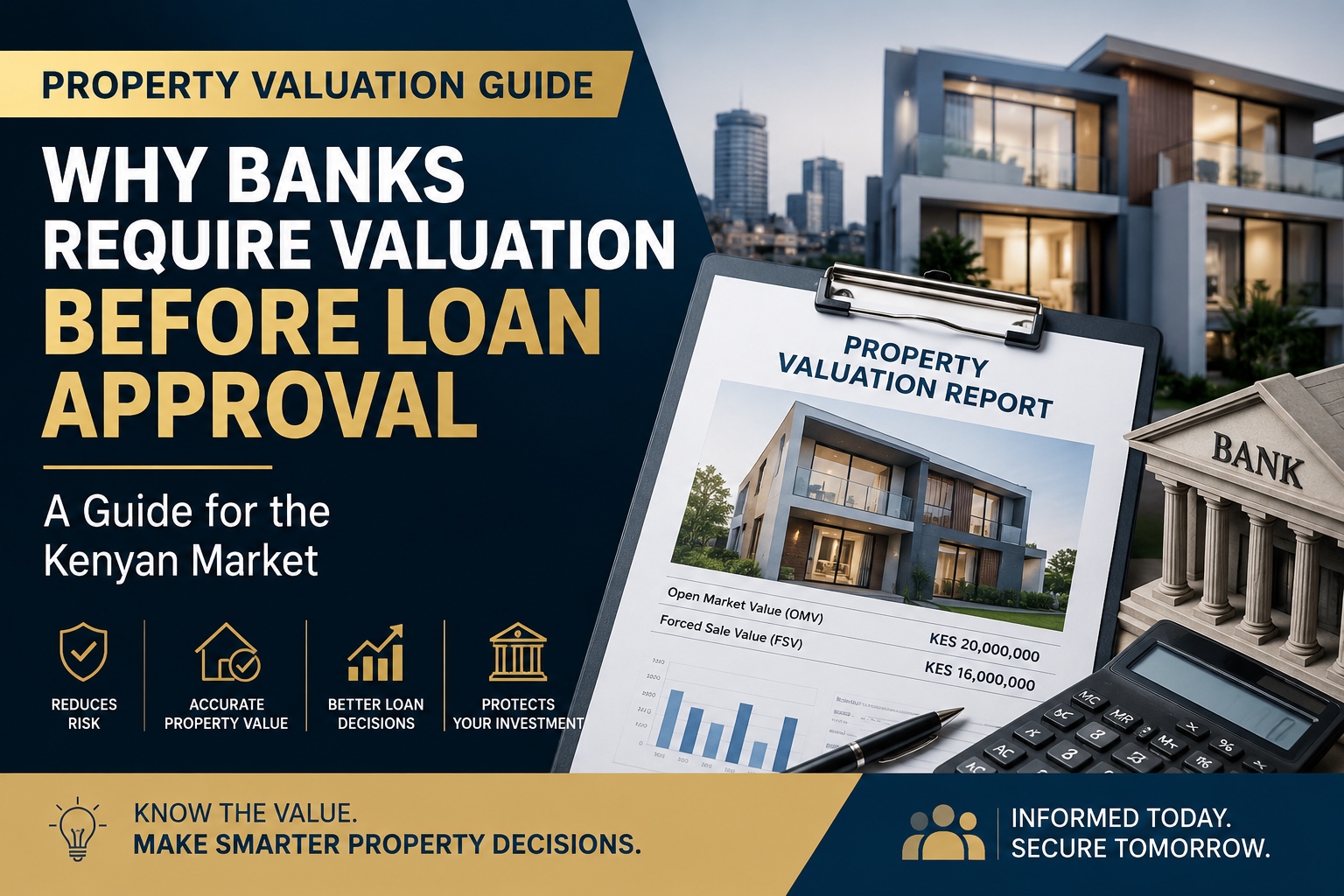
Why Banks Require Valuation Before Loan Approval in Kenya – Property Valuation Guide
Whether you are buying a home, refinancing an existing facility, or using property as collateral for a business loan, one of the first requirements from a bank is a professional property valuation. Many borrowers often wonder why this step is necessary, especially when a purchase price has already been agreed upon.
In the Kenyan property market, valuation plays a critical role in protecting both the lender and the borrower by ensuring that the property offered as security reflects its true market worth.
What is a Property Valuation?
A property valuation is an independent assessment of the current value of a property carried out by a qualified and licensed valuer. The valuer inspects the property, analyses market trends, reviews comparable sales, and prepares a professional report indicating its value.
The report typically includes:
- Property location and description
- Land and building details
- Ownership information
- Market analysis
- Comparable property transactions
- Open Market Value (OMV)
- Forced Sale Value (FSV)
- Photographs and supporting documentation
Why Do Banks Require a Property Valuation?
1. To Determine the Property’s True Market Value
The agreed purchase price is not always an accurate reflection of the property’s actual worth. Market conditions, emotional buying decisions, or inflated asking prices can affect transaction values.
A valuation provides an objective opinion of value based on current market evidence.
2. To Assess Lending Risk
When a bank advances a mortgage or secured loan, the property serves as collateral. If the borrower defaults, the lender may need to recover the outstanding debt through a sale of the property.
The valuation helps the bank determine whether the security offered is sufficient for the amount being borrowed.
3. To Calculate the Loan-to-Value (LTV) Ratio
Banks typically lend a percentage of the property’s market value rather than the purchase price.
For example:
- Property Market Value: KES 20,000,000
- Bank’s Maximum LTV: 90%
- Maximum Loan Amount: KES 18,000,000
If the agreed purchase price exceeds the valuation, the borrower may need to provide a larger deposit.
4. To Determine the Forced Sale Value
Besides the Open Market Value, valuers also provide a Forced Sale Value (FSV).
This represents the estimated amount the property could reasonably achieve if sold within a limited timeframe, usually under mortgage recovery circumstances.
Banks use this figure to better understand their exposure in the event of default.
What Types of Loans Require Property Valuation?
Property valuation is commonly required for:
- Home mortgages
- Commercial property loans
- Construction financing
- Equity release facilities
- Loan refinancing
- Business loans secured against property
- Development financing
Who Carries Out the Valuation?
Most Kenyan banks appoint valuers from their approved panel of registered and licensed valuation firms.
These professionals are expected to provide an independent opinion that complies with accepted valuation standards and banking requirements.
Borrowers should note that a valuation commissioned for one bank may not necessarily be accepted by another institution.
How is a Property Valued?
A valuer typically considers several factors, including:
Location
Properties in prime areas such as Westlands, Karen, Riverside, Parklands, Kilimani, Nyali, and City Centres may command higher values due to demand and infrastructure.
Land Size
The size and shape of the plot influence value, particularly for development sites.
Building Characteristics
- Age and condition
- Construction quality
- Floor area
- Design and finishes
- Number of bedrooms and bathrooms
Comparable Sales
Recent transactions involving similar properties within the same locality provide important market evidence.
Market Conditions
Economic trends, infrastructure developments, and prevailing supply and demand all affect value.
What Documents May Be Required?
Depending on the transaction, the valuer may request:
- Copy of the Title Deed or Lease
- Mutation or Survey Plan (where applicable)
- Building plans or approvals
- Sale Agreement (for purchases)
How Long Does the Valuation Process Take?
In most cases, a mortgage valuation can be completed within 3 to 5 working days, depending on:
- Accessibility of the property
- Availability of documentation
- Complexity of the assignment
- Bank processing timelines
Can the Bank Decline a Loan Based on the Valuation?
Yes.
A bank may reduce the loan amount or decline the application if:
- The property’s value is lower than expected.
- There are legal or ownership concerns.
- The development is incomplete or unauthorized.
- The property has limited marketability.
- There are significant structural defects.
Common Misconceptions About Property Valuation
“The valuation should equal the purchase price.”
Not necessarily. A valuer’s role is to estimate market value, which may be higher or lower than the agreed transaction price.
“The highest valuation is always the best.”
An inflated valuation can expose both the borrower and lender to unnecessary financial risk.
“Valuation is just a formality.”
In reality, it is one of the most important steps in the loan approval process and often determines the amount a bank is willing to lend.
Property valuation is a fundamental part of mortgage lending in Kenya. It helps banks manage risk, ensures borrowers do not overpay for property, and promotes transparency within the real estate market.
Whether you are purchasing your first home, investing in commercial property, or seeking development finance, understanding the purpose of valuation can help you navigate the lending process with greater confidence.
A professional valuation is more than a banking requirement—it is an informed assessment that supports sound financial and real estate decisions.

Last updated:
