
 by
by 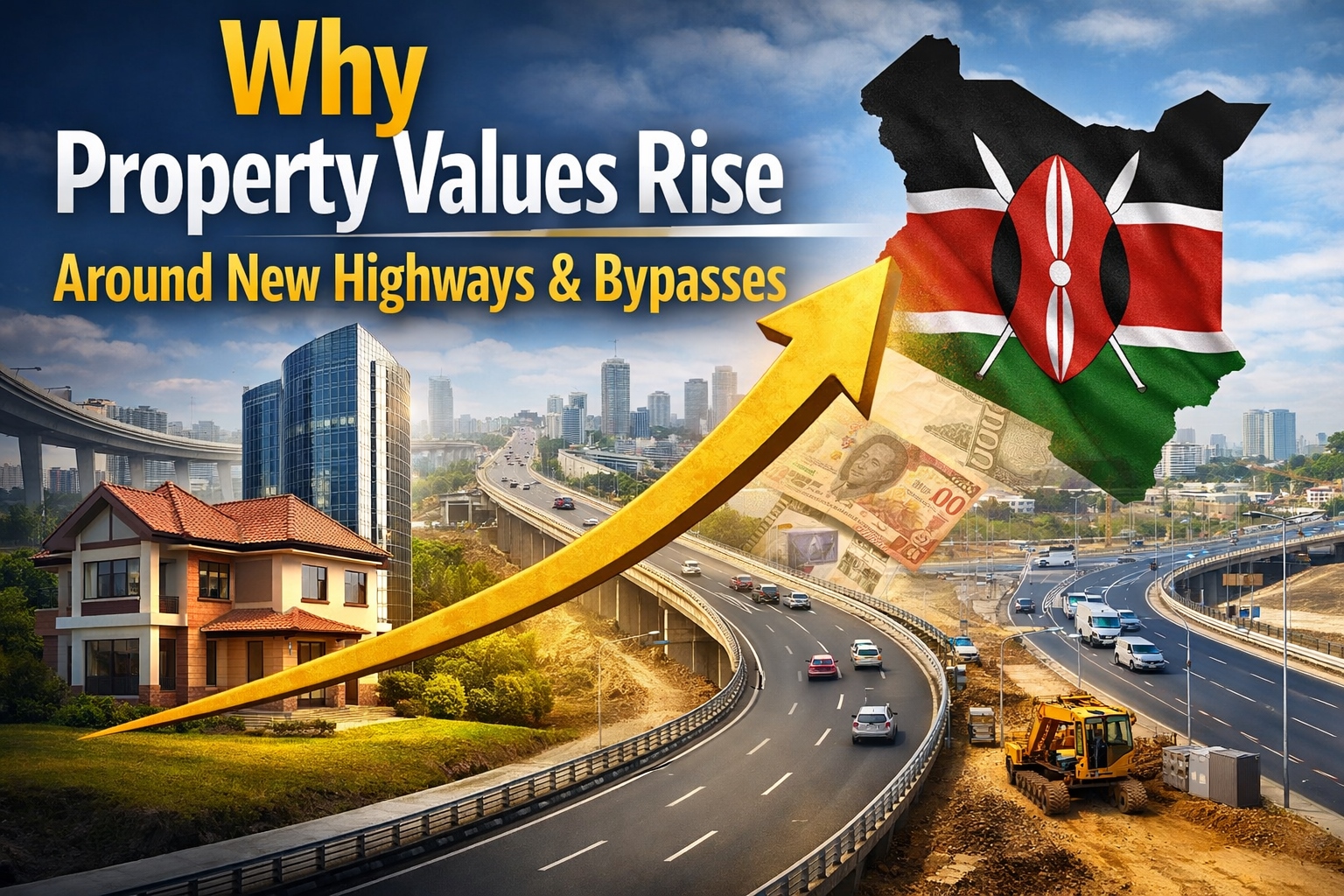
Why Property Values Rise Around New Highways, Bypasses & Infrastructure Projects in Kenya
Infrastructure development is one of the most powerful drivers of real estate growth. Across many countries, property prices often increase significantly after the construction of highways, bypasses, railways, and other major infrastructure projects. In Kenya, this trend has been clearly observed in areas surrounding projects such as the Nairobi Expressway, the Thika Superhighway, and the Standard Gauge Railway.
For property investors, landowners, and developers, understanding how infrastructure influences property values is essential for making strategic investment decisions. In many cases, the announcement or construction of a new transport corridor can transform previously overlooked areas into thriving real estate hotspots.
The Link Between Infrastructure and Property Value
Real estate value is largely influenced by location, accessibility, and economic activity. Infrastructure projects directly affect these factors by improving connectivity, reducing travel time, and stimulating economic growth.
When governments invest in major roads, railways, and public utilities, they create the foundation for urban expansion and regional development. Areas that were once difficult to access suddenly become attractive for residential, commercial, and industrial development.
As a result, the demand for land and property increases, which drives up prices.
Improved Accessibility and Reduced Travel Time
Accessibility is one of the most important determinants of property value. Properties located in areas with convenient transportation links tend to command higher prices because they provide easier access to workplaces, markets, schools, and services.
When a new highway or bypass is constructed, it significantly reduces travel time between key locations. This makes surrounding areas more desirable for both residential and commercial purposes.
For example, the construction of the Thika Superhighway dramatically reduced travel time between Thika and Nairobi. Areas along this corridor experienced rapid growth in residential developments, shopping centers, and commercial complexes. Land prices in towns such as Ruiru and Juja rose substantially after the highway improved connectivity.
When travel becomes easier and faster, people are more willing to live farther from city centers. This expands the effective boundaries of cities and increases the value of land in surrounding areas.
Increased Demand from Investors and Developers
Infrastructure projects often signal future economic growth. Investors and developers closely monitor government infrastructure plans because they indicate where future development is likely to occur.
When a new road or railway is announced, investors begin purchasing land in anticipation of rising property values. Developers also move into these areas to construct housing estates, commercial buildings, and industrial facilities.
This surge in demand creates competition for available land, which leads to higher property prices. In many cases, prices begin rising even before construction of the infrastructure project is completed.
Emergence of Satellite Towns
Major infrastructure projects frequently contribute to the development of satellite towns around large cities.
As cities expand and populations grow, housing demand increases while land in central locations becomes more expensive. Improved transport networks allow people to live in areas outside the main city while still commuting easily for work or business.
In Kenya, the growth of satellite towns around Nairobi has been strongly influenced by improved road networks. Areas that were once rural or semi-rural have evolved into thriving urban centers due to better connectivity.
Satellite towns often experience rapid increases in property values because they provide more affordable alternatives to expensive urban neighborhoods while still offering convenient access to the city.
Expansion of Commercial and Business Activity
Infrastructure projects also attract commercial development and business investment. Improved transportation makes it easier for businesses to move goods, access customers, and reach suppliers.
As a result, areas near major highways and transport corridors often see the development of:
-
Shopping centers
-
Petrol stations
-
Warehousing and logistics facilities
-
Hotels and restaurants
-
Industrial parks
-
Office complexes
These developments create jobs and increase economic activity in the area. As the local economy grows, demand for residential and commercial property rises, which further increases property values.
Improved Land Utility and Development Potential
Before the construction of major infrastructure, some land may be underutilized because of poor accessibility or lack of supporting services.
Once roads, railways, or utilities are introduced, land becomes easier to access and develop. This increases its highest and best use, which is a key principle in property valuation.
For example, land previously used for agriculture may become suitable for residential housing, retail development, or industrial facilities once infrastructure improvements occur.
Because land becomes more productive and valuable when it can support higher-value uses, property prices tend to increase after infrastructure development.
Government and Private Sector Investment
Infrastructure projects often trigger additional government and private sector investments in surrounding areas. Once a new highway or railway is constructed, other developments typically follow.
These may include:
-
Schools and universities
-
Hospitals and healthcare facilities
-
Shopping malls and entertainment centers
-
Residential estates
-
Public utilities such as water and electricity
These developments enhance the quality of life in the area, making it more attractive to residents and businesses. As the area becomes more developed and desirable, property values increase.
Population Growth and Urban Expansion
Infrastructure also supports population growth and urban expansion. As transport networks improve, more people move into areas that were previously difficult to access.
This population growth increases demand for housing, retail space, and services. Developers respond by building more homes, apartments, and commercial facilities.
Over time, these areas transform into vibrant communities with strong local economies. The increase in population and economic activity contributes to higher property values.
Speculation and Market Expectations
Real estate markets are influenced not only by current conditions but also by expectations about the future.
When a major infrastructure project is announced, investors often anticipate that property prices will rise in the surrounding areas. As a result, they may purchase land early in order to benefit from future price increases.
This speculative activity can drive property prices upward even before construction begins.
However, speculation also carries risks. Investors should conduct proper research and due diligence before purchasing property based solely on anticipated infrastructure developments.
Infrastructure Projects That Transformed Property Markets in Kenya
Several major infrastructure projects have significantly influenced property values in Kenya.
Why Professional Valuation Is Important
While infrastructure development can increase property values, it is important for buyers, investors, and lenders to understand the true market value of property before making investment decisions.
Professional valuation helps determine:
-
Current market value
-
Future development potential
-
Impact of nearby infrastructure projects
-
Investment risk and return potential
Professional firms such as Avenue Valuers Limited provide expert property valuation and advisory services that help investors make informed decisions in a dynamic real estate market.
Key Considerations for Property Investors
Investing near infrastructure projects can offer strong returns, but investors should consider several factors before purchasing property.
These include:
-
Proximity to the infrastructure project
-
Zoning regulations and land use policies
-
Availability of utilities and services
-
Environmental considerations
-
Long-term development plans for the area
Conducting proper due diligence ensures that investors avoid risks and maximize the potential benefits of infrastructure-driven property growth.
Conclusion
Infrastructure development plays a critical role in shaping real estate markets. Highways, bypasses, railways, and other major projects improve accessibility, stimulate economic activity, and attract investment.
As a result, property values often rise significantly in areas surrounding these developments.
For investors, developers, and landowners, understanding the relationship between infrastructure and property value can help identify emerging opportunities and make informed investment decisions.
In many cases, areas that benefit from new infrastructure today become tomorrow’s most valuable real estate locations.

Our Fact Checking Process
We prioritize accuracy and integrity in our content. Here's how we maintain high standards:
- Expert Review: All articles are reviewed by subject matter experts.
- Source Validation: Information is backed by credible, up-to-date sources.
- Transparency: We clearly cite references and disclose potential conflicts.
Your trust is important. Learn more about our Fact Checking process and editorial policy.
Our Review Board
Our content is carefully reviewed by experienced professionals to ensure accuracy and relevance.
- Qualified Experts: Each article is assessed by specialists with field-specific knowledge.
- Up-to-date Insights: We incorporate the latest research, trends, and standards.
- Commitment to Quality: Reviewers ensure clarity, correctness, and completeness.
Look for the expert-reviewed label to read content you can trust.



Join The Discussion