
 by
by 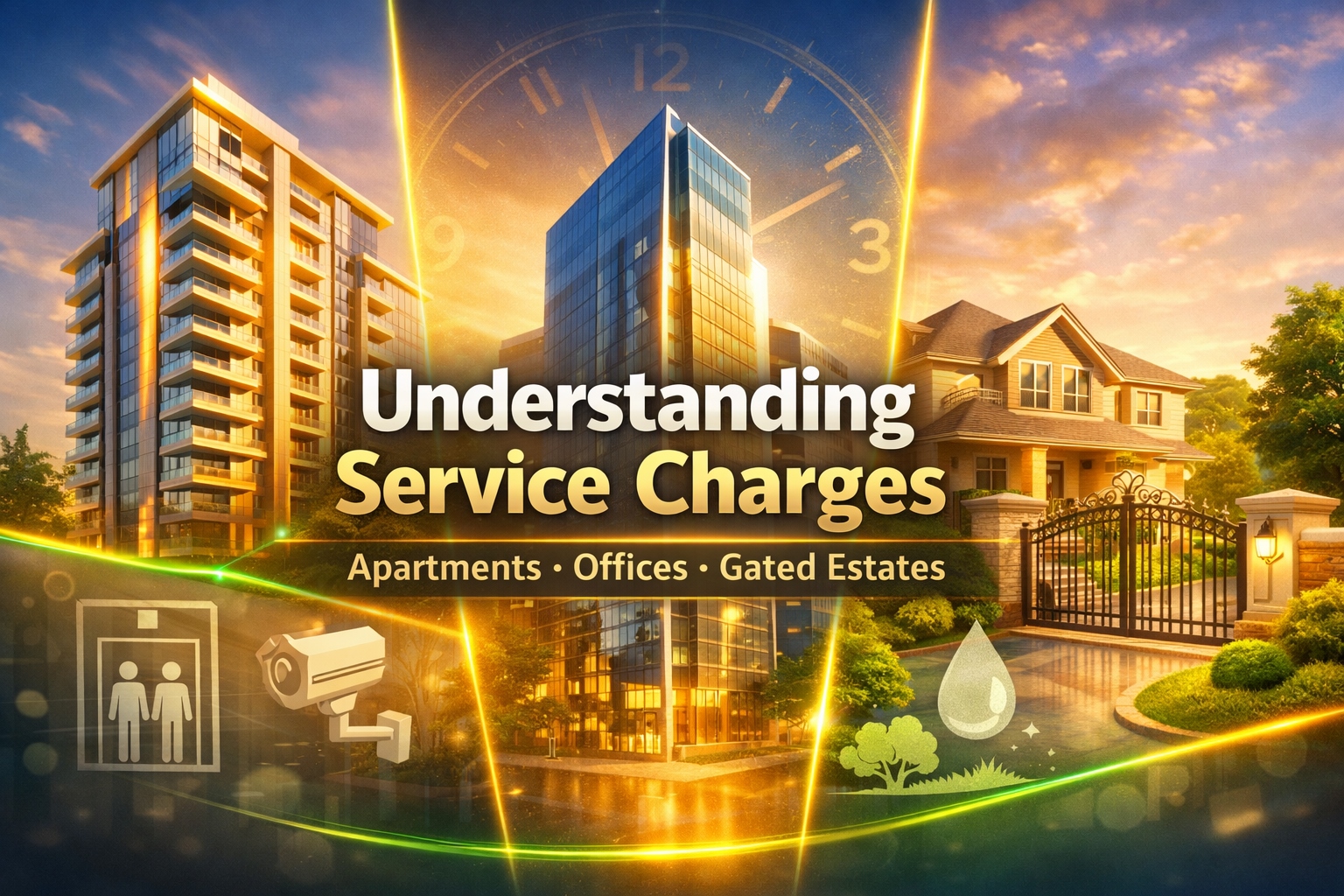
Understanding Service Charge in Apartments, Office Buildings, and Gated Estates in Kenya
Why Service Charge Deserves Serious Attention
In Kenya’s evolving real estate market, service charge has become one of the most influential — and misunderstood — aspects of property ownership and occupation. Whether purchasing an apartment, leasing office space, or buying into a gated residential estate, service charge represents a long-term financial commitment that can shape affordability, lifestyle quality, investment returns, and resale value.
Despite its importance, service charge is often treated as an afterthought during transactions. Buyers focus on purchase price, tenants negotiate rent, and investors calculate yields — yet the ongoing cost of maintaining shared infrastructure is frequently underestimated. In reality, service charge is not merely an expense; it is a governance and asset-preservation mechanism that determines how well a property performs over time.
This in-depth article provides a comprehensive explanation of service charge across apartments, office buildings, and gated estates in Kenya, examining what it covers, how it is calculated, why it varies, and how it affects property value and decision-making.
1. What Is Service Charge?
Service charge is a recurring contribution paid by property owners — and in many cases recovered from tenants — to fund the operation, management, repair, and maintenance of common areas and shared services within a property or development.
Unlike rent or purchase price, service charge does not generate profit for owners. Instead, it exists to:
-
Maintain safety and functionality
-
Preserve physical condition and aesthetics
-
Ensure compliance with regulations
-
Protect long-term asset value
In professionally managed developments, service charge is a collective investment that prevents deterioration, disputes, and costly emergency repairs.
2. Understanding Common Areas and Shared Services
Common areas are spaces and systems not owned exclusively by a single unit owner but shared by all occupants or users of a development.
Typical Common Areas Across Property Types
-
Entrance lobbies and reception areas
-
Staircases, corridors, and lift lobbies
-
Parking areas and internal roads
-
Boundary walls, fencing, and gates
-
Landscaping and green spaces
-
Shared amenities and utilities infrastructure
The scale, complexity, and intensity of use of these areas vary significantly between apartments, offices, and gated estates — directly influencing service charge levels.
3. Service Charge in Apartment Developments
3.1 Why Service Charge Is Critical in Apartments
Apartment living depends heavily on shared systems. Individual owners cannot independently maintain lifts, corridors, roofs, or security infrastructure. Service charge ensures that these shared elements function consistently and safely.
Poorly managed service charge in apartment buildings often leads to:
-
Lift breakdowns
-
Deteriorating common areas
-
Security lapses
-
Declining rental and resale values
3.2 What Apartment Service Charge Typically Covers
Security Services
-
Manned security guards
-
CCTV systems and monitoring
-
Access control and intercoms
Cleaning and Hygiene
-
Daily cleaning of corridors and staircases
-
Waste collection and disposal
-
Pest control in shared areas
Maintenance and Repairs
-
Lift servicing and statutory inspections
-
Shared plumbing and drainage systems
-
Electrical systems in common areas
-
Minor structural repairs
Utilities for Common Areas
-
Electricity for lighting and security systems
-
Water for cleaning and landscaping
-
Backup power for lifts and common areas
Management and Administration
-
Property management company fees
-
Accounting, audits, and reporting
-
Staff salaries (caretakers, technicians)
Insurance and Compliance
-
Insurance for common areas
-
Fire safety systems and inspections
3.3 Key Cost Drivers in Apartment Developments
Service charge varies widely between apartment buildings due to:
-
Number and speed of lifts
-
Backup power infrastructure
-
Size and quality of amenities
-
Total number of units sharing costs
-
Efficiency of property management
High-end apartments often have higher service charges, reflecting amenity intensity and service expectations rather than inefficiency.
4. Service Charge in Office Buildings
4.1 Why Office Service Charge Is More Complex
Office buildings house more technical systems, and are subject to stricter compliance requirements than residential properties. As a result, service charge in commercial offices is often higher and more variable.
4.2 What Office Building Service Charge Typically Covers
Security and Access Management
-
24-hour manned security
-
Visitor management systems
-
CCTV and access control
Cleaning and Janitorial Services
-
Daily cleaning of common areas
-
Washroom maintenance
Mechanical, Electrical, and Plumbing (MEP) Systems
-
Lift servicing
-
Air conditioning and ventilation systems
-
Fire detection and suppression systems
Utilities for Common Areas
-
Lighting of shared spaces
-
Backup generators
-
Water for shared facilities
Building Management and Compliance
-
Facilities management teams
-
Statutory inspections and certifications
-
Insurance for common areas
4.3 How Office Service Charge Is Structured
Office service charge is commonly:
-
Charged per square foot or square metre
-
Recovered from tenants by landlords
-
Reconciled annually against actual costs
Tenants should carefully review service charge budgets, as operational inefficiencies directly affect occupancy costs.
5. Service Charge in Gated Residential Estates
5.1 The Unique Nature of Estate Service Charge
In gated estates comprising standalone houses or townhouses, service charge focuses on estate-wide infrastructure and services, rather than building systems.
5.2 What Gated Estate Service Charge Typically Covers
Security and Access Control
-
Manned gates and patrols
-
CCTV and access systems
Roads and Infrastructure
-
Internal roads and drainage
-
Street lighting
Landscaping and Open Spaces
-
Common green areas
-
Parks and playgrounds
Shared Utilities and Services
-
Boreholes and water systems
-
Waste management
Estate Management
-
Estate manager and administration
-
Legal and compliance costs
5.3 Key Cost Drivers in Gated Estates
-
Size of the estate
-
Road and infrastructure length
-
Level of security provision
-
Number of homes sharing costs
Low-density, high-end estates often have higher per-unit service charges due to scarcity and infrastructure scale.
6. How Service Charge Is Calculated
Across property types, service charge is generally based on:
-
Annual operating budget
-
Allocation formula (unit size, plot size, or floor area)
-
Anticipated maintenance and reserve funding
Billing may be monthly, quarterly, or annually. Transparency in budgeting is a key indicator of good governance.
7. The Role of Reserve and Sinking Funds
A critical but often overlooked component of service charge is the reserve or sinking fund.
These funds cater for:
-
Lift replacement
-
Major repairs
-
Road resurfacing
-
Infrastructure upgrades
Without reserve funds, owners face sudden special levies that can strain finances and reduce property appeal.
8. Governance, Transparency, and Accountability
Well-managed developments typically have:
-
Active owners’ or management associations
-
Annual budgets and audited accounts
-
Clear communication with owners and tenants
Poor governance leads to arrears, disputes, and rapid deterioration — directly affecting value.
9. Service Charge and Property Value
Service charge influences:
-
Market perception
-
Tenant retention
-
Long-term capital appreciation
Developments with realistic, transparent service charge structures tend to outperform poorly managed ones, even when headline costs appear higher.
10. Key Questions Buyers, Tenants, and Investors Should Ask
-
What exactly does the service charge cover?
-
Are audited financial statements available?
-
Is there a reserve or sinking fund?
-
Who manages the property or estate?
-
Are there arrears or disputes?
Conclusion: Service Charge as a Long-Term Value Strategy
Service charge is a defining feature of modern real estate ownership in Kenya. When properly structured and transparently managed, it preserves functionality, protects value, and enhances livability. When neglected or misunderstood, it becomes a source of conflict and financial risk.
Understanding service charge — across apartments, office buildings, and gated estates — empowers buyers, investors, landlords, and occupiers to make sustainable, informed property decisions in an increasingly complex real estate market.

Our Fact Checking Process
We prioritize accuracy and integrity in our content. Here's how we maintain high standards:
- Expert Review: All articles are reviewed by subject matter experts.
- Source Validation: Information is backed by credible, up-to-date sources.
- Transparency: We clearly cite references and disclose potential conflicts.
Your trust is important. Learn more about our Fact Checking process and editorial policy.
Our Review Board
Our content is carefully reviewed by experienced professionals to ensure accuracy and relevance.
- Qualified Experts: Each article is assessed by specialists with field-specific knowledge.
- Up-to-date Insights: We incorporate the latest research, trends, and standards.
- Commitment to Quality: Reviewers ensure clarity, correctness, and completeness.
Look for the expert-reviewed label to read content you can trust.



Join The Discussion