
 by
by 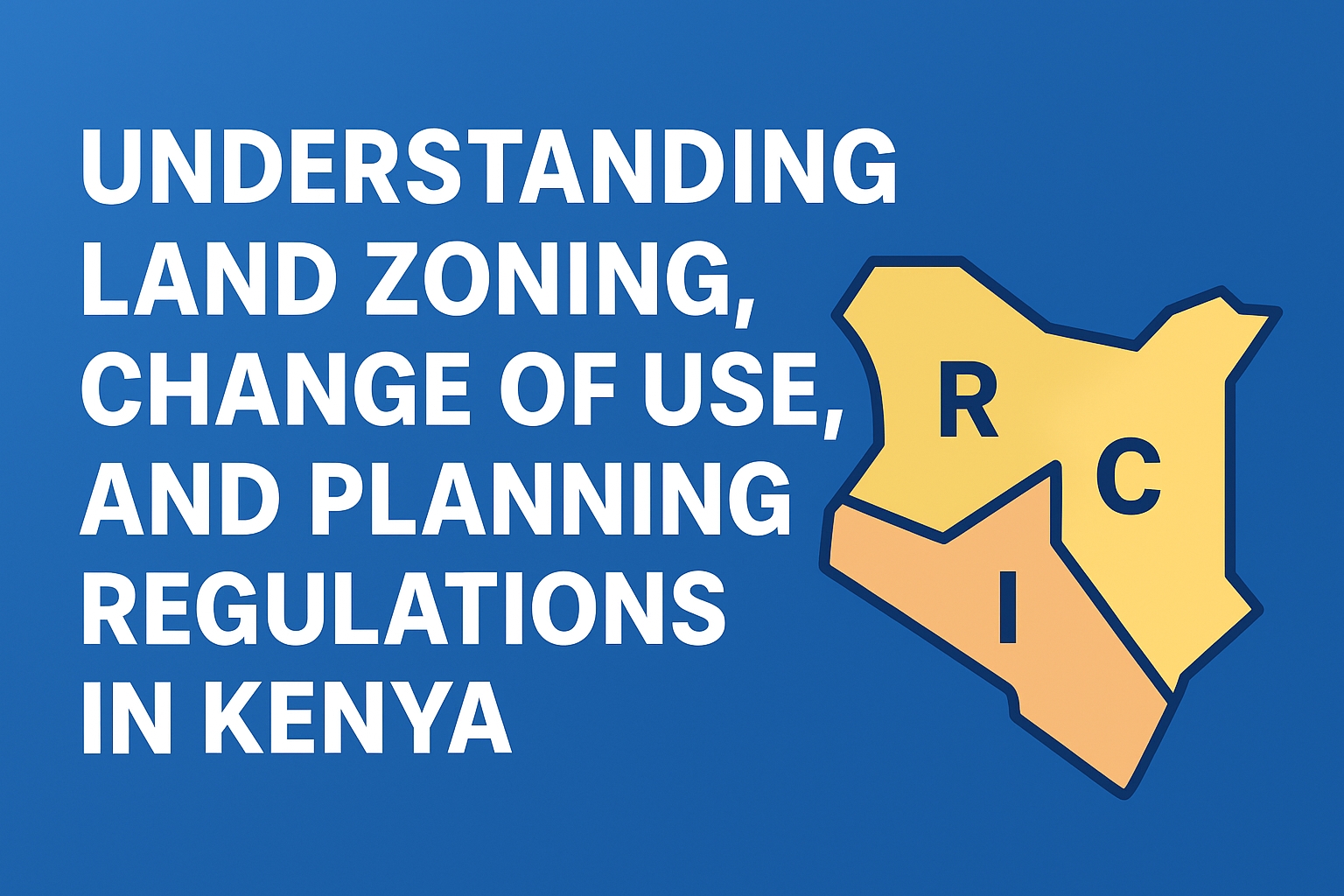
Understanding Land Zoning, Change of Use, and Planning Regulations in Kenya
Land development in Kenya is becoming increasingly structured as counties adopt modern planning frameworks, enforce zoning regulations, and implement approval processes aligned with the Physical and Land Use Planning Act (2019). Whether you are a developer, investor, land buyer, valuer, architect, planner, or property owner, understanding zoning, change of use, and planning regulations is essential for making legally compliant and financially sound real estate decisions.
This in-depth guide explains what zoning means, how change of use works, the approvals required, and why these processes matter for land and property development in Kenya.
Land Zoning in Kenya
Land zoning is a regulatory system used by County Governments to control land use within specific geographic areas. It dictates what can be built, at what density, how high, on how much space, and with what supporting infrastructure. Zoning ensures urban order, environmental safety, improved livability, and long-term sustainability.
Common Land Zoning Categories in Kenya
Land zoning varies across counties, but the following categories are widely recognized:
Residential Zones (R1, R2, R3…)
These zones regulate residential development densities:
-
Low-density residential (R1) – e.g., single dwelling units, bungalows, maisonettes
-
Medium-density residential (R2) – townhouses, low-rise apartments
-
High-density residential (R3 and above) – multi-storey apartment blocks
Zoning dictates allowable plot sizes, building heights, plot coverage, and the number of units.
Commercial Zones (C1, C2, C3)
These accommodate offices, retail centers, mixed-use buildings, malls, and business parks.
Rules cover parking requirements, access roads, traffic circulation, waste management, and building heights.
Industrial Zones
Industrial zones are classified as light, medium, or heavy industrial, supporting activities such as manufacturing, warehousing, processing, fabrication, and logistics.
Mixed-Use Zones
These zones allow a combination of residential, commercial, hospitality, and institutional developments. They are common in rapidly urbanizing areas such as Nairobi’s Upper Hill, Kilimani, Westlands, Kileleshwa, and Mombasa Road.
Agricultural Zones
Agricultural land is designated for farming, plantations, livestock keeping, horticulture, and agro-processing. Converting agricultural land to urban use requires Change of Use approval.
Special Planning Zones
Some areas are designated for unique purposes such as:
-
Tourism
-
Conservation
-
Wetlands and riparian reserves
-
Transport corridors
-
Heritage and cultural sites
-
Government and security installations
Zoning helps protect sensitive areas and guide sustainable land use.
Why Zoning is important in Kenya’s Real Estate Market
Zoning affects how much a property is worth, what developers can build, and the type of buyers or tenants the land can attract.
Key Reasons Zoning Matters
1. Protects property value
Zoning prevents incompatible land uses—e.g., a nightclub next to a residential estate/school.
2. Guides sustainable development
It prevents congestion, environmental degradation, and improper land subdivision.
3. Supports infrastructure planning
County planners align zoning with roads, drainage, sewer lines, water, schools, and amenities.
4. Ensures legal compliance
Building outside the designated zoning can result in demolition or closure.
5. Enhances financing eligibility
Banks typically require compliance with zoning before approving loans for developments.
Understanding zoning is therefore essential before purchasing land or starting a construction project.
How to Check the Zoning of a Property in Kenya
Before buying land or planning a development, you should confirm the zoning category. This can be done through:
County Physical Planning Departments
County offices provide zoning maps, regulations, allowed uses, and development restrictions.
GIS Planning Portals
Counties such as Nairobi offer online portals with zoning maps accessible to the public.
Registered Physical Planners and Valuers
Professionals interpret zoning regulations, assess risks, and advise on compliance.
Approved Physical Development Plans
These maps outline current and future land uses, density levels, and approved developments.
Failing to confirm zoning beforehand may lead to stalled projects, financial losses, or legal battles.
Change of Use: What It Means and When You Need It
Change of Use is the formal process of altering the designated use of a parcel of land to match a new intended purpose. This process is essential when your proposed project does not align with the current zoning.
Examples of Change of Use Applications
-
Agricultural → Residential
-
Residential → Commercial
-
Residential → High-rise apartments
-
Commercial → Mixed-use
-
Agricultural → Industrial
-
Residential → Institutional (school, church, hospital)
In urban counties, Change of Use is common as population growth pushes developers to convert bungalows into apartment complexes or turn residential plots into commercial developments.
When Change of Use is Required
A Change of Use application is necessary when:
-
Your intended development does not comply with existing zoning
-
You want to increase density (e.g., from R1 to R3)
-
You intend to establish a business in a residential area
-
You are converting agricultural land near towns for development
-
A bank or investor requires it for financing
-
You want to subdivide or amalgamate land differently than allowed
Building without Change of Use approval risks enforcement notices, penalties, or demolition.
Process of Change of Use Application in Kenya
The Change of Use approval process involves several professional and administrative steps.
Engaging a Registered Physical Planner
A licensed physical planner prepares a planning brief, location plan, site analysis, development justification, and compliance reports.
Submission to the County Government
You must submit:
-
Title deed
-
Survey plan (FR or RIM)
-
Latest official search
-
Planning brief
-
Proposed development plan
-
Land ownership documents
Public Participation and Newspaper Notice
Counties require a public notice (often 14 days) in local newspapers so affected parties can object if necessary.
Technical Evaluation
A multi-disciplinary County Planning Committee reviews the application.
Site Inspection by County Officials
The property is physically inspected for feasibility, infrastructure availability, and compliance.
Approval and Issuance of Change of Use Letter
If approved, the County issues a Change of Use approval letter.
Registration at the Lands Registry
The Change of Use is then endorsed on the title to formally legalize the new land use.
Development Control and Planning Regulations You Must Follow
After determining zoning and obtaining Change of Use (if required), you must comply with planning regulations before construction begins.
Development Control Regulations in Kenya
Plot Coverage and Site Coverage
Defines the maximum area of the land that can be built on.
Floor Area Ratio (FAR)
Determines the total allowable floor area relative to the plot size.
Building Height Restrictions
Limits how high you can build based on zoning and proximity to airports or restricted areas.
Setbacks
Minimum distance required from property boundaries, roads, rivers, and utilities.
Parking Requirements
Commercial and residential buildings must provide a specified number of parking spaces.
Environmental Impact Assessment (EIA)
Large developments require NEMA approval.
Infrastructure Compliance
Availability of water, sewer, drainage, electricity, and access roads affects approval.
Approvals from Sector Regulators
Depending on the project location or type, approvals may be required from:
-
NCA (construction oversight)
-
NEMA (environment)
-
KCAA (aviation)
-
KPLC/KENGEN
-
WASCO (water & sewer)
-
KPC or EPRA (energy installations)
Compliance ensures a smooth development process and protects the investment’s long-term value.
Why Zoning and Planning Regulations Matter to Investors
Protect Your Investment
Investing in land without understanding zoning can lead to losses if the land cannot support your intended project.
Enhance Property Value and Marketability
Commercial zoning or high-density zoning can significantly increase property value.
Reduce Legal and Financial Risks
Non-compliance can attract penalties, demolition, or development suspension.
Support Financing and Insurance
Banks, insurers, and financiers rely on zoning compliance when reviewing loan or insurance applications.
Guide Highest and Best Use
Zoning helps investors determine the most profitable and legally allowed developments.
Role of Property Valuers and Urban Planners
Property Valuers
Valuers assess how zoning and planning regulations affect:
-
Market value
-
Highest and best use of land
-
Development potential
-
Mortgage and insurance value
-
Forced sale value
-
Investment viability
-
Risks associated with non-compliance
Their advice helps investors make informed, financially sound decisions.
Urban / Physical Planners
Planners ensure a development is legally compliant by:
-
Preparing Change of Use reports
-
Interpreting zoning regulations
-
Creating development proposals
-
Liaising with County planning departments
-
Ensuring technical, environmental, and spatial planning compliance
Valuers and planners work together to ensure land use is financially viable and legally sound.
Understanding land zoning, change of use, and planning regulations is essential for anyone involved in Kenya’s real estate market. These frameworks protect property value, guide sustainable urban development, and ensure orderly growth across counties. Whether you are planning to buy land, develop apartments, start a business, subdivide property, or apply for financing, zoning and planning compliance must be your first step.
By working with registered valuers, physical planners, architects, surveyors, and legal professionals, you ensure that your investment is secure, compliant, financially viable, and aligned with Kenya’s modern planning standards.

Our Fact Checking Process
We prioritize accuracy and integrity in our content. Here's how we maintain high standards:
- Expert Review: All articles are reviewed by subject matter experts.
- Source Validation: Information is backed by credible, up-to-date sources.
- Transparency: We clearly cite references and disclose potential conflicts.
Your trust is important. Learn more about our Fact Checking process and editorial policy.
Our Review Board
Our content is carefully reviewed by experienced professionals to ensure accuracy and relevance.
- Qualified Experts: Each article is assessed by specialists with field-specific knowledge.
- Up-to-date Insights: We incorporate the latest research, trends, and standards.
- Commitment to Quality: Reviewers ensure clarity, correctness, and completeness.
Look for the expert-reviewed label to read content you can trust.



Join The Discussion