
 by
by 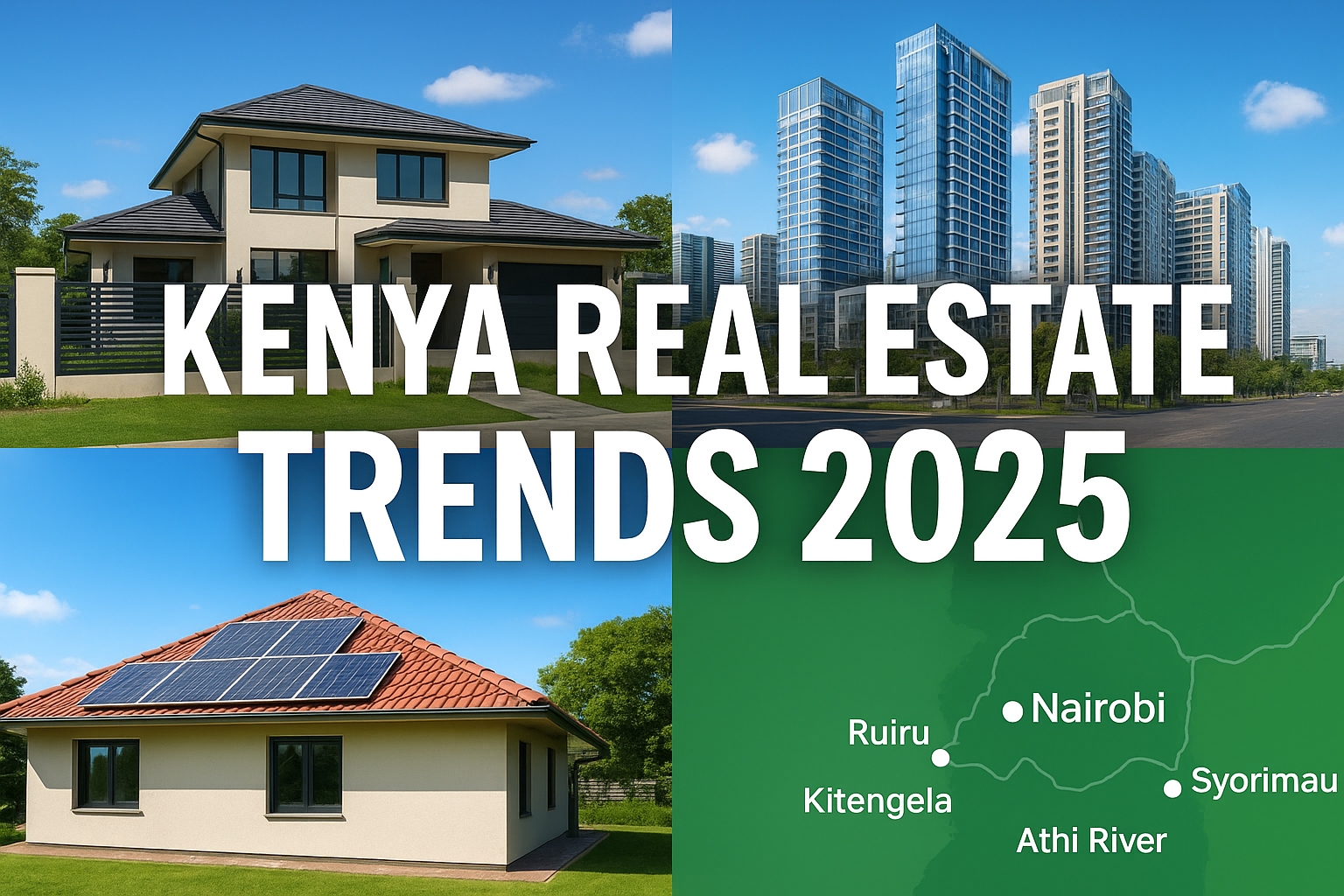
Real Estate Trends 2025: Insights for Buyers, Investors, and Developers in Kenya
The real estate market is evolving faster than ever, shaped by technology, infrastructure, and shifting lifestyle demands. Understanding the latest trends is crucial for buyers, investors, and developers looking to maximize returns and make informed decisions. Whether you are seeking residential, commercial, or land investment opportunities in Kenya or exploring global real estate trends, 2025 offers exciting prospects.
Technology and PropTech Transforming Real Estate
PropTech is revolutionizing how properties are marketed, bought, and managed. Artificial intelligence (AI) powers accurate predictive analytics, and market trend insights. Virtual property tours, 3D walkthroughs, and augmented reality are enhancing the property search experience. Blockchain is introducing secure transactions, tokenization of real estate assets, and smart contracts that reduce fraud.
In Kenya, digital platforms like Ardhisasa are improving land registry transparency, making property transactions safer and more accessible for local and diaspora investors. Technology adoption in real estate ensures faster deals, better market intelligence, and higher confidence for investors.
Sustainability and Green Building Drive Demand
Sustainable real estate is no longer optional. Homebuyers and investors increasingly seek energy-efficient properties featuring solar panels, rainwater harvesting systems, and eco-friendly building materials. Developers are integrating Environmental, Social, and Governance (ESG) principles into projects, creating long-term value while appealing to socially conscious buyers.
Green buildings and eco-conscious developments are becoming a key differentiator in Kenya, especially for residential estates and high-end commercial projects. Properties that reduce energy costs and environmental impact are attracting higher demand and faster appreciation.
Flexible and Mixed-Use Developments Dominate Urban Spaces
Mixed-use developments that combine residential, commercial, and retail spaces are redefining urban living. Buyers and tenants are drawn to the convenience, lifestyle amenities, and accessibility these projects offer. Co-living and co-working spaces are growing in popularity as hybrid work arrangements reshape the way people live and work.
In Nairobi, Mombasa, and rapidly developing satellite towns, mixed-use and lifestyle-focused real estate projects are attracting both investors and end-users, providing higher returns on investment.
Infrastructure Investment Boosts Property Value
Infrastructure projects remain a major driver of property appreciation. Expressways, bypasses, and improved transport networks unlock new areas for residential and commercial development. In Kenya, towns like Ruiru, Kitengela, Athi River, and Syokimau are experiencing rapid growth due to improved connectivity, offering affordable alternatives to city living.
Properties along key infrastructure corridors see faster value growth, making infrastructure a critical factor in investment decision-making.
Satellite Towns and Secondary Cities Gain Momentum
Secondary cities and satellite towns are emerging as prime investment destinations. These areas provide affordable land, less congestion, and high potential for long-term capital growth. Investors increasingly focus on land acquisitions in peri-urban areas around Nairobi and Mombasa, anticipating future urban expansion and infrastructure development.
Satellite towns offer an attractive combination of affordability and growth potential, making them a hotspot for real estate investors in Kenya.
Affordable Housing Remains a Top Priority
Affordable housing continues to be a major trend globally and in Kenya. The Kenyan government’s Affordable Housing Programme is expanding rapidly, providing middle- and low-income buyers access to quality homes.
Developers are responding with innovative financing solutions, longer mortgage terms, and off-plan developments to make homeownership more attainable. Affordable housing projects not only address the housing deficit but also offer investors consistent demand and attractive returns.
Lifestyle and Wellness-Oriented Properties Attract Buyers
Wellness-focused real estate is reshaping property design. Biophilic architecture, better indoor air quality, and spaces designed for mental and physical well-being are in high demand. Shared amenities such as gyms, rooftop gardens, and recreational spaces enhance lifestyle appeal, particularly in gated communities and luxury estates.
Properties that combine comfort, convenience, and wellness are increasingly sought after, making lifestyle-oriented developments a strong investment strategy.
Real Estate as a High-Return Investment
Real estate continues to deliver competitive returns through rental income and capital appreciation. Innovative solutions like property tokenization and off-plan investments are lowering barriers for investors and increasing liquidity.
In Kenya, land investments in satellite towns and off-plan residential projects are particularly attractive, offering long-term growth potential. Investors looking to diversify portfolios increasingly view real estate as a reliable and lucrative asset class.
Digital Land Registries and Transaction Transparency
Digitization is making property transactions safer and more efficient. Digital land registries, online property platforms, and electronic contracts reduce fraud risk and streamline the buying process.
Kenya’s focus on digital land registration enhances transparency and security, attracting local and diaspora investors to the market. Digitally verified properties provide peace of mind and faster transaction timelines.
Luxury and Gated Communities Remain Highly Desirable
High-end real estate in areas like Karen, Runda, Kilimani, and Westlands continues to attract wealthy buyers. Gated communities offering modern amenities, top-tier security, and integrated lifestyle solutions are highly sought after.
Luxury estates remain resilient even during market fluctuations, appealing to buyers who prioritize exclusivity, comfort, and convenience.
The real estate market in 2025 is shaped by technology, sustainability, lifestyle preferences, infrastructure, and affordability. In Kenya, satellite towns, mixed-use developments, digital land platforms, and gated communities are driving market growth, while global innovations like PropTech, wellness-focused design, and ESG investments influence buyer expectations.
Understanding these trends is critical for anyone involved in real estate—whether you are buying your first home, investing for capital appreciation, or developing properties that meet modern demand. Staying ahead of these trends ensures smarter decisions, better returns, and a competitive advantage in a rapidly evolving market.

Our Fact Checking Process
We prioritize accuracy and integrity in our content. Here's how we maintain high standards:
- Expert Review: All articles are reviewed by subject matter experts.
- Source Validation: Information is backed by credible, up-to-date sources.
- Transparency: We clearly cite references and disclose potential conflicts.
Your trust is important. Learn more about our Fact Checking process and editorial policy.
Our Review Board
Our content is carefully reviewed by experienced professionals to ensure accuracy and relevance.
- Qualified Experts: Each article is assessed by specialists with field-specific knowledge.
- Up-to-date Insights: We incorporate the latest research, trends, and standards.
- Commitment to Quality: Reviewers ensure clarity, correctness, and completeness.
Look for the expert-reviewed label to read content you can trust.



Join The Discussion