
 by
by 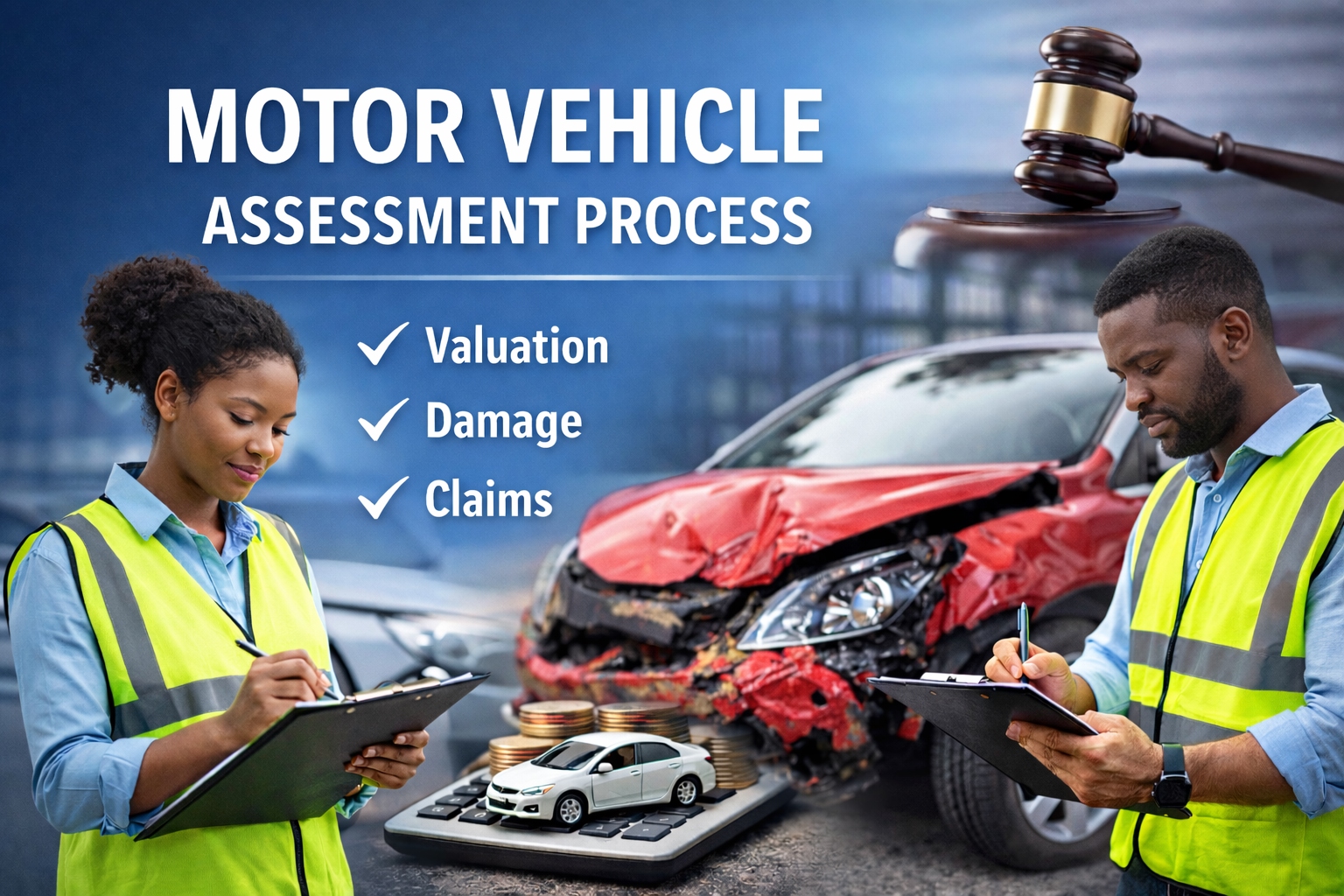
Motor Vehicle Assessment in Kenya
Comprehensive FAQs on Motor Vehicle Valuation and Insurance Claims
Motor vehicle assessment is a critical process that sits at the intersection of insurance, asset valuation, engineering judgment, and dispute resolution. Whether following a road traffic accident, during an insurance claim, or for asset management and legal purposes, the quality and credibility of a motor vehicle assessment can significantly influence outcomes for vehicle owners, insurers, financiers, and courts.
This comprehensive guide explains the motor vehicle assessment process in detail, addressing valuation principles, claims handling, technical considerations, and common areas of misunderstanding. It is designed to provide clarity, manage expectations, and promote informed decision-making.
What Is a Motor Vehicle Assessment?
A motor vehicle assessment is a professional, systematic evaluation of a vehicle conducted to determine one or more of the following:
-
Market or insurance value
-
Extent and nature of damage
-
Repair methodology and cost reasonableness
-
Economic viability of repairs
-
Residual or salvage value
-
Roadworthiness and safety implications
The assessment culminates in a formal written report that documents findings, assumptions, and professional opinions.
Motor vehicle assessments are commonly relied upon by:
-
Insurance companies
-
Policyholders
-
Fleet operators
-
Financial institutions
-
Lawyers and courts
-
Government and regulatory bodies
- Individuals.
Who Is a Motor Vehicle Assessor?
A motor vehicle assessor is a trained and qualified professional with expertise in vehicle assembly, repair practices, market valuation, and insurance principles. The assessor’s role is to provide an independent, objective opinion, based on evidence and professional standards.
Assessors are distinct from:
-
Mechanics, who carry out repairs
-
Panel beaters, who estimate repair costs
-
Loss adjusters, who manage claims on behalf of insurers
While these roles may collaborate, the assessor’s independence is essential to maintaining credibility and fairness.
Why Is Motor Vehicle Assessment Important?
Motor vehicle assessments serve several critical functions:
-
Ensuring fair insurance settlements
-
Preventing over- or under-indemnification
-
Reducing disputes between insurers and claimants
-
Supporting sound financial and legal decisions
-
Detecting fraud or misrepresentation
-
Protecting road safety standards
Inaccurate or poorly conducted assessments can result in delayed claims, financial losses, legal disputes, and reputational damage.
When Is a Motor Vehicle Assessment Required?
A motor vehicle assessment may be required in various scenarios, including:
Insurance Claims
-
After a road traffic accident
-
For theft or fire losses
-
To determine total loss or repair viability
Valuation Purposes
-
Buying or selling a vehicle
-
Insurance policy placement or renewal
-
Financing and leasing
-
Asset registers and balance sheets
Legal and Dispute Resolution
-
Court cases and arbitration
-
Subrogation and recovery claims
-
Divorce, probate, or estate matters
Commercial and Fleet Management
-
Fleet risk assessment
-
Depreciation analysis
-
Residual value planning
What Is the Difference Between Vehicle Valuation and Damage Assessment?
Although often used interchangeably, vehicle valuation and damage assessment serve different purposes.
Vehicle Valuation
Vehicle valuation determines the monetary value of a vehicle at a specific point in time. This may include:
-
Market value
-
Forced sale value
-
Insurance value
-
Replacement value
Valuation is influenced by market trends, vehicle condition, age, mileage, and demand.
Damage Assessment
Damage assessment evaluates:
-
Accident-related damage
-
Repair scope and methodology
-
Cost of repairs
-
Safety implications
In insurance claims, both valuation and damage assessment are typically required to establish settlement outcomes.
How Does the Motor Vehicle Assessment Process Work?
The assessment process generally follows a structured sequence:
-
Instruction – The assessor receives formal instructions outlining the scope and purpose of the assessment.
-
Document Review – Vehicle documents, insurance details, and accident reports are reviewed.
-
Inspection – Physical or desktop inspection is conducted.
-
Analysis – Damage, repair costs, and market data are analyzed.
-
Valuation – Pre- and post-loss values are determined where applicable.
-
Reporting – A formal assessment report is prepared and issued.
Each step is essential to ensuring accuracy and defensibility.
What Happens During a Physical Vehicle Inspection?
A physical inspection allows the assessor to directly observe the vehicle and verify key details.
During inspection, the assessor typically:
-
Confirms vehicle identity (chassis number, registration, specifications)
-
Examines visible and structural damage
-
Assesses safety-critical components
-
Reviews workmanship quality (where repairs have begun)
-
Verifies repair estimates and parts pricing
-
Takes photographic evidence
Physical inspections are preferred where access is possible, especially for complex damage.
What Is a Desktop Motor Vehicle Assessment?
A desktop assessment is conducted without physically inspecting the vehicle. Instead, the assessor relies on:
-
High-resolution photographs
-
Repair estimates
-
Vehicle documentation
-
Market data
Desktop assessments are commonly used when:
-
Vehicles are in remote locations
-
Access is restricted
-
Time sensitivity is critical
However, desktop assessments carry greater assumptions and limitations, which must be clearly disclosed in the report.
How Is the Pre-Accident Value Determined?
Pre-accident value represents the fair market value of the vehicle immediately before the loss.
Key factors considered include:
-
Make, model, and year of manufacture
-
Engine capacity and specifications
-
Mileage and usage patterns
-
Overall condition prior to the accident
-
Optional extras and modifications
-
Prevailing market demand and supply
Comparable market evidence plays a crucial role in establishing credibility.
What Is Post-Accident or Residual Value?
Post-accident value, often referred to as salvage value, represents the estimated value of the vehicle in its damaged state.
This value is important when:
-
The vehicle is declared a total loss
-
The insurer intends to dispose of the salvage
-
Settlement amounts are being calculated
Salvage value depends on damage severity, parts recoverability, and market demand for damaged vehicles.
What Does “Total Loss” Mean in Motor Vehicle Assessment?
A vehicle is considered a total loss when:
-
Repair costs exceed an economic threshold, or
-
Repairs are technically unsafe or impractical
The threshold is often expressed as a percentage of pre-accident value and may vary by insurer and policy.
The assessor provides a professional recommendation, but the final determination rests with the insurer.
Can a Vehicle Be Repaired Even If It Is a Total Loss?
In some cases, a vehicle may be technically repairable but still classified as a total loss due to:
-
High repair costs
-
Diminished post-repair value
-
Safety or structural concerns
Economic viability, not just technical feasibility, is central to total loss decisions.
How Are Repair Costs Evaluated?
Assessors evaluate repair costs by:
-
Reviewing repair estimates
-
Comparing parts prices with market rates
-
Assessing labor times and methodologies
-
Ensuring repairs align with manufacturer and industry standards
The aim is not to minimize costs unfairly, but to ensure reasonableness and necessity.
Can an Assessor Influence Insurance Claim Outcomes?
An assessor does not make claim settlement decisions. Their role is to provide independent findings and professional opinions.
Insurance companies use the assessment report alongside:
-
Policy terms and conditions
-
Coverage limits
-
Liability determinations
Objectivity is essential to maintaining trust in the assessment process.
Why Do Insurance Claims Sometimes Get Delayed?
Common causes of delay include:
-
Missing or incomplete documentation
-
Disputed repair costs or values
-
Additional inspections or clarifications required
-
Coverage interpretation issues
A comprehensive and well-documented assessment helps reduce these delays.
What Documents Are Required for a Motor Vehicle Assessment?
Typical documentation includes:
-
Vehicle registration or logbook
-
Insurance policy or claim reference
-
Accident report or claim form
-
Repair estimates
-
Photographs (for desktop assessments)
Requirements vary depending on the purpose and scope of the assessment.
Is a Motor Vehicle Assessment Report Legally Defensible?
Yes, provided it is:
-
Prepared by a qualified assessor
-
Based on verifiable evidence
-
Clear in assumptions and limitations
-
Objective and well-reasoned
Assessment reports are frequently relied upon in courts, arbitration, and mediation.
Can a Motor Vehicle Assessment Be Disputed?
Yes. Disputes may arise over:
-
Valuation figures
-
Repair methodology
-
Total loss classification
Resolution options include:
-
Review or clarification
-
Second independent assessment
-
Legal or arbitration processes
Professional documentation is critical in such situations.
Why Is Independence Important in Motor Vehicle Assessment?
Independence ensures:
-
Fairness to all parties
-
Reduced bias
-
Greater credibility
-
Acceptance by insurers and courts
An independent assessor protects both the claimant and the insurer.
How Long Does the Motor Vehicle Assessment Process Take?
Timelines vary depending on:
-
Complexity of damage
-
Availability of documents
-
Inspection access
Once all information is available, most assessments are completed within a reasonable professional timeframe.
What Are Common Misconceptions About Motor Vehicle Valuation?
Common misconceptions include:
-
“The insurer sets the value arbitrarily”
-
“Repair estimates equal claim payouts”
-
“Older vehicles have no salvage value”
In reality, valuation is evidence-based and subject to professional standards.
How Does Motor Vehicle Assessment Reduce Fraud?
Assessors help detect:
-
Pre-existing damage
-
Inflated repair costs
-
Misrepresentation of vehicle condition
-
Inconsistent documentation
This protects insurers and honest policyholders alike.
What Role Does Technology Play in Modern Assessments?
Technology supports:
-
Digital imaging and documentation
-
Market data analysis
-
Desktop assessments
-
Faster report turnaround
However, professional judgment remains essential.
Final Thoughts
Motor vehicle assessment is a specialized professional service that underpins fair insurance settlements, accurate valuations, and credible dispute resolution. It combines technical expertise, market knowledge, and objective judgment to ensure that all parties are treated fairly.
Understanding the assessment process helps vehicle owners, insurers, and stakeholders navigate claims with confidence, clarity, and realistic expectations.

Our Fact Checking Process
We prioritize accuracy and integrity in our content. Here's how we maintain high standards:
- Expert Review: All articles are reviewed by subject matter experts.
- Source Validation: Information is backed by credible, up-to-date sources.
- Transparency: We clearly cite references and disclose potential conflicts.
Your trust is important. Learn more about our Fact Checking process and editorial policy.
Our Review Board
Our content is carefully reviewed by experienced professionals to ensure accuracy and relevance.
- Qualified Experts: Each article is assessed by specialists with field-specific knowledge.
- Up-to-date Insights: We incorporate the latest research, trends, and standards.
- Commitment to Quality: Reviewers ensure clarity, correctness, and completeness.
Look for the expert-reviewed label to read content you can trust.



Join The Discussion