
 by
by 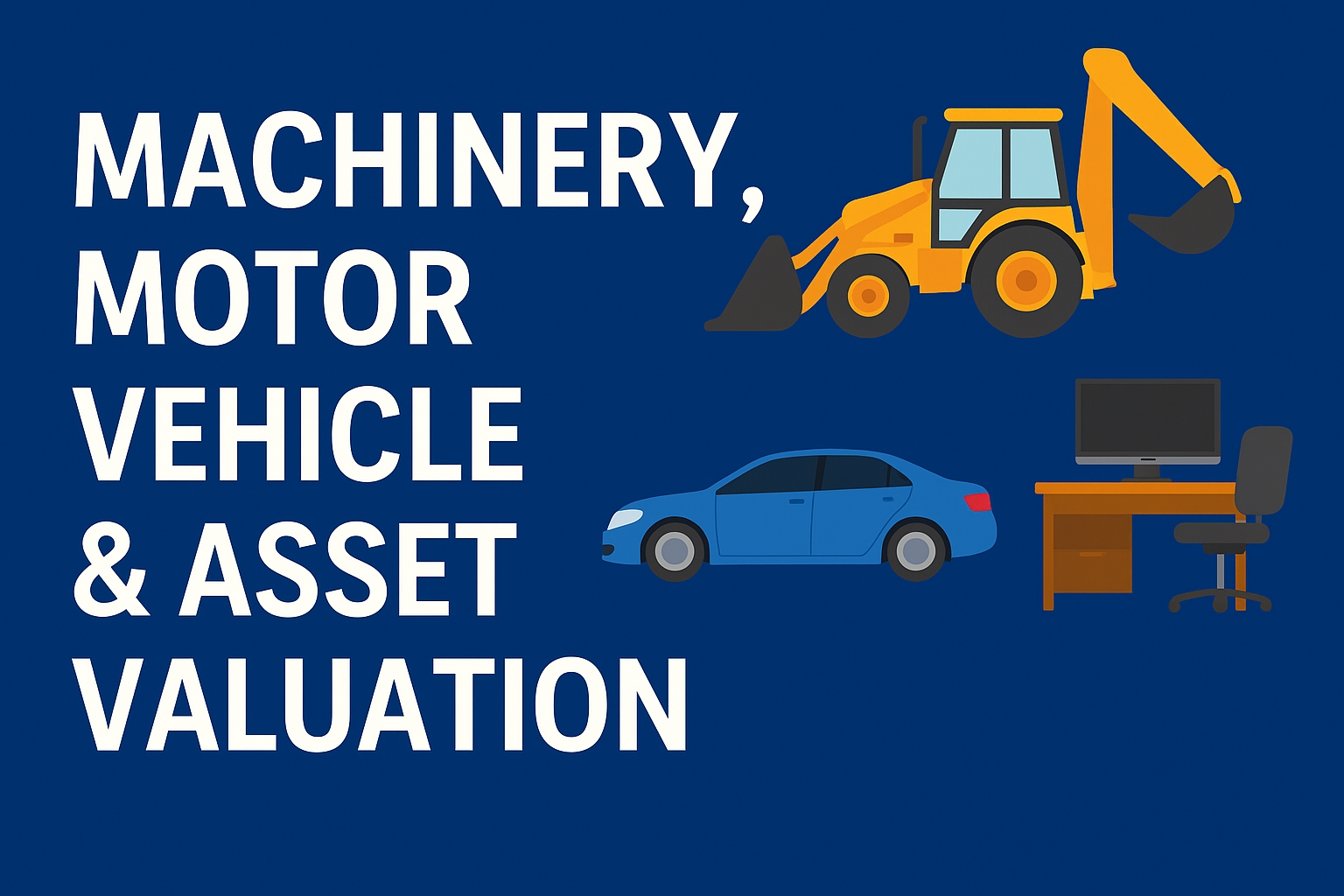
Machinery, Motor Vehicle & Asset Valuation in Kenya: A Professional Guide for Sale/Purchase, Loan, or Insurance
Asset valuation is a critical process for businesses, lenders, insurers, and individuals who need accurate estimates of market value, loan security value, replacement cost, or disposal value. Whether you are valuing machinery, motor vehicles, office equipment, furniture, or industrial assets, understanding the correct methodology ensures transparency, minimizes risk, and supports sound financial decisions.
This guide details how professional valuers determine the value of machinery, equipment, motor vehicles, and corporate assets in Kenya, including key factors, depreciation methods, and best practices.
1. Machinery & Equipment Valuation
Machinery and equipment valuation is essential for businesses in manufacturing, construction, transport, agriculture, oil & gas, printing, medical and engineering industries. Valuations may be required for:
-
Sale or acquisition
-
Securing loans
-
Insurance underwriting
-
Audits and accounting
-
Mergers and acquisitions
-
Asset registers
-
Liquidation or auction
1.1 Key Factors Used to Value Machinery & Equipment
Professional valuers consider several fundamental factors:
1. Condition
Condition directly affects value. Valuers assess:
-
Operational efficiency
-
Wear and tear
-
Service and maintenance records
-
Availability of spare parts
-
Breakdown history
-
Current working state (running, non-functional, partially functional)
Equipment in excellent mechanical condition typically retains value better than poorly maintained assets.
2. Age of the Machinery
Age is assessed in relation to:
-
Expected economic life
-
Usage intensity
-
Technological relevance
-
Brand reputation
Older machinery may still hold significant value if well-maintained and from a reputable brand.
3. Brand Value & Manufacturer Reputation
Brands known for durability, reliability and strong after-sales support often command higher value. Examples include:
-
CAT, Komatsu, JCB (construction & heavy equipment)
-
John Deere, Massey Ferguson, New Holland (agricultural machinery)
-
Toyota, Isuzu, Scania (commercial & transport)
-
Siemens, Mitsubishi (industrial equipment)
Brand influence also affects resale market demand.
4. Replacement Cost Approach (RCA)
One of the most used methods in equipment valuation.
Valuers determine:
-
The current market price of a new, similar machine
-
Cost of importation (shipping, duty, VAT)
-
Installation and commissioning cost
-
Less depreciation based on age, condition, and obsolescence
This method is ideal for insurance valuations.
5. Market Comparison Approach
This uses market sales data of similar equipment:
-
Local sales listings
-
Auction data
-
Import prices
-
Dealer quotations
Most useful for sale or loan purposes.
6. Depreciation Methods Used
Valuers apply various depreciation models depending on asset type and purpose:
a) Straight-Line Depreciation
Best for assets with uniform wear over time.
b) Reducing Balance Method
Reflects higher depreciation in the early years.
c) Usage-Based Depreciation
Applies to machines whose value reduces based on hours used or output generated.
d) Economic Obsolescence Assessment
Considers loss of value due to technology changes or reduced demand.
1.2 Summary: How Valuers Determine Machinery Value
-
Inspect asset physically
-
Review maintenance logs
-
Determine age & economic life
-
Evaluate brand demand
-
Apply depreciation model
-
Determine replacement cost
-
Compare with market data
-
Produce valuation report
2. Motor Vehicle Valuation in Kenya
Motor vehicle valuations are essential for:
-
Loan security
-
Insurance underwriting
-
Sale or purchase
-
Fleet audits
-
Financial reporting
-
Investment decisions
Professional valuers consider both physical inspection and market research.
2.1 Key Factors in Motor Vehicle Valuation
1. Make & Model
Premium brands (Toyota, Subaru, Mercedes, BMW, VW, Lexus) hold value better than low-demand brands.
Models with:
-
Higher fuel efficiency
-
Availability of spare parts
-
High resale demand
tend to attract higher market value.
2. Year of Manufacture (YOM) & Year of First Registration
Value decreases with age, depending on:
-
Depreciation standards
-
Import restrictions (8-year rule)
-
Technological features
3. Mileage
Vehicles with lower mileage retain value. Mileage indicates usage intensity and mechanical wear.
4. Accident & Repair History
A clean accident record significantly boosts value. Valuers check:
-
Structural repairs
-
Repainted sections
-
Frame or chassis damage
-
Replacement parts (original vs aftermarket)
5. Mechanical Condition
Includes inspection of:
-
Engine performance
-
Transmission
-
Suspension
-
Electrical systems
-
Tyres & bodywork
6. Depreciation Standards
Common in motor vehicle valuations:
-
20–25% first year depreciation
-
10–15% annually depending on brand and market conditions
-
Adjusted for mileage, condition, and demand
7. Market Comparison
Valuers use:
-
Dealer quotations
-
Car bazaar data
-
Import valuation references
-
Auction sales
This establishes a realistic open-market value.
2.2 Summary: How Valuers Determine Motor Vehicle Value
-
Physical inspection
-
Review service/repair history
-
Note YOM, mileage, make, model
-
Apply depreciation standards
-
Compare with market prices
-
Generate valuation certificate
3. Valuation of Office Equipment & Furniture
Office equipment includes:
-
Desks & chairs
-
Workstations
-
Cabinets & safes
-
Computers, printers, copiers
-
IT equipment
-
Boardroom furniture
-
Specialized corporate machinery
Valuation is important for:
-
Audits & financial reporting
-
Asset registers
-
Insurance
-
Tendering
-
Mergers & acquisitions
-
SME asset financing
3.1 Key Valuation Factors
1. Age & Useful Life
Different assets have different useful lives:
-
ICT equipment: 3–5 years
-
Office furniture: 5–10 years
-
Safes/steel cabinets: 10–15 years
2. Condition
Valuers inspect:
-
Wear and tear
-
Structural stability
-
Functional performance
-
Cleanliness and maintenance
3. Replacement Cost
The cost of buying a similar new item today. Especially important for insurance and audits.
4. Market Data
Valuers review:
-
Retail prices
-
Corporate disposal listings
-
Auction sales
-
Importation costs
5. Depreciation Method
Often straight-line depreciation is applied for office equipment.
4. Why Professional Valuation Matters
Accurate asset valuation provides:
✔ Insurance companies
– Precise replacement cost
– Fair premiums
– Accurate risk assessment
✔ Banks & lenders
– Reliable security value
– Reduced loan default risk
– Proper collateral assessment
✔ Businesses & SMEs
– Accurate financial reporting
– Asset register updates
– Audit compliance
✔ Buyers & sellers
– True market price
– Negotiation confidence
– Fraud protection
✔ Corporates
– Transparency in mergers & acquisitions
– Fixed asset management
– Disposal planning
Whether you are dealing with heavy machinery, motor vehicles, or office equipment, asset valuation must follow structured, professional methodologies. A qualified valuer ensures accuracy, compliance, and financial transparency.
Correct valuation protects your investments, supports borrowing power, strengthens insurance coverage, and helps businesses maintain up-to-date asset records.

Our Fact Checking Process
We prioritize accuracy and integrity in our content. Here's how we maintain high standards:
- Expert Review: All articles are reviewed by subject matter experts.
- Source Validation: Information is backed by credible, up-to-date sources.
- Transparency: We clearly cite references and disclose potential conflicts.
Your trust is important. Learn more about our Fact Checking process and editorial policy.
Our Review Board
Our content is carefully reviewed by experienced professionals to ensure accuracy and relevance.
- Qualified Experts: Each article is assessed by specialists with field-specific knowledge.
- Up-to-date Insights: We incorporate the latest research, trends, and standards.
- Commitment to Quality: Reviewers ensure clarity, correctness, and completeness.
Look for the expert-reviewed label to read content you can trust.



Join The Discussion