
 by
by 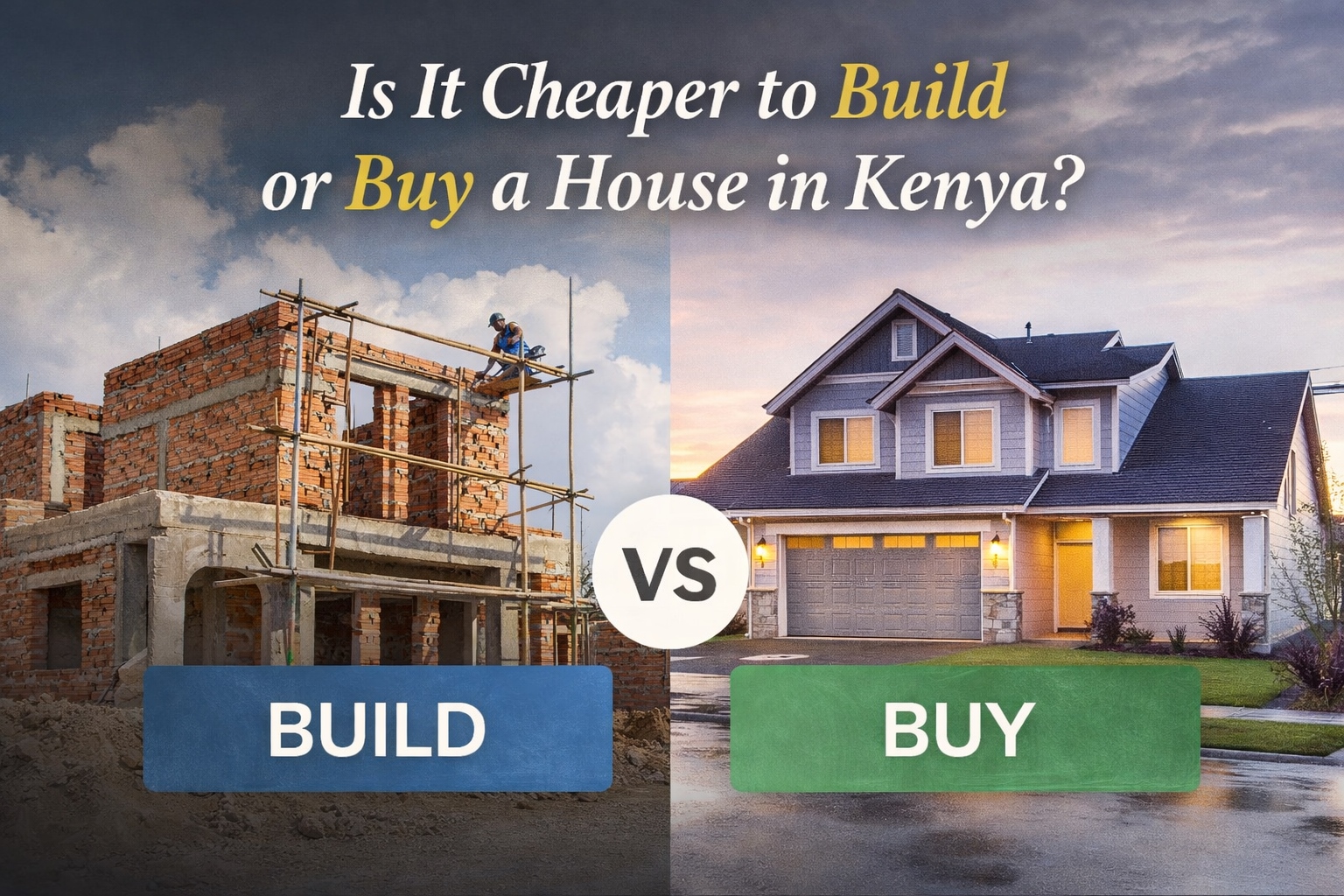
Is It Cheaper to Build or Buy a House in Kenya?
A Comprehensive Cost Comparison and Decision Guide
A Question Every Kenyan Homebuyer Asks
One of the most common—and most important—questions in Kenya’s real estate market today is whether it is cheaper to build a house or buy a ready-made one.
With rising construction costs, fluctuating land prices, and increasing demand for housing across Nairobi and satellite towns, the decision is no longer straightforward. For first-time homeowners, diaspora buyers, investors, and families planning long-term settlement, choosing incorrectly can mean millions of shillings in avoidable costs.
This article provides a clear, research-based comparison of building versus buying a house in Kenya. It examines:
-
Construction costs
-
Land prices
-
House sale prices
-
Hidden and indirect costs
-
Time, risk, and financing considerations
Rather than offering a one-size-fits-all answer, this guide helps you determine which option makes more financial sense based on your circumstances.
Understanding the Cost of Building a House in Kenya
Average Construction Costs in Kenya (Per Square Metre)
Construction costs in Kenya are typically measured per square metre (m²) and vary depending on location, design complexity, and finish quality.
As of recent market data, approximate construction costs are:
-
Basic finishes: KES 35,000 – 45,000 per m²
-
Mid-range finishes: KES 45,000 – 55,000 per m²
-
High-quality finishes: KES 55,000 – 65,000+ per m²
A typical 3-bedroom house of 100–200 m² would therefore cost:
-
Basic: KES 3.5M – 5.4M
-
Mid-range: KES 5M – 7.8M
-
High-end: KES 7M – 11M+
These figures cover construction only and exclude land, professional fees, approvals, and utilities.
Additional Costs When Building a House
Many people underestimate the true cost of building by focusing only on construction. In reality, several additional expenses apply:
1. Professional Fees
-
Architect: 4–6% of construction cost
-
Structural & civil engineers
-
Quantity surveyor (optional but recommended)
2. Statutory Approvals
-
County government approvals
-
NCA registration
-
Environmental approvals (where applicable)
3. Site Preparation
-
Soil testing
-
Excavation
-
Retaining walls (in sloped areas)
4. Utilities & Infrastructure
-
Electricity connection
-
Water connection or borehole
-
Sewer or septic system
-
Access road improvements (common in developing areas)
5. Contingency Costs
Construction projects in Kenya often face:
-
Material price fluctuations
-
Labour shortages
-
Weather delays
A 10–20% contingency buffer is strongly recommended.
Land Costs: The Biggest Variable in the Build vs Buy Decision
Land cost is often the single most decisive factor in whether building is cheaper than buying.
Average Land Prices in Kenya
Land prices vary dramatically by location:
-
Nairobi prime suburbs: KES 25M – 40M+ per ½ acre
-
Nairobi satellite towns (Ruiru, Kitengela, Athi River):
KES 1.5M – 6M for ⅛ to ¼ acre -
Secondary towns (Nakuru, Eldoret, Thika):
KES 800K – 3M -
Rural areas: From KES 300K upwards
In many urban locations, land alone costs more than the house itself.
When Building Becomes Cheaper
Building tends to be more cost-effective when:
-
You already own land
-
You are building in satellite towns or rural areas
-
You control design and size to match your budget
If you must first buy expensive land, the cost advantage of building often disappears.
The Cost of Buying a House in Kenya
House Prices Across Kenya
House prices depend on location, type, and demand. Typical price ranges include:
-
Nairobi suburban standalone houses:
KES 25M – 40M+ -
Gated community homes:
KES 10M – 25M -
Satellite towns (Ruiru, Syokimau, Kitengela):
KES 6M – 15M -
Secondary towns:
KES 5M – 12M
Buying prices already include:
-
Land value
-
Construction cost
-
Developer margin
-
Infrastructure provision
Additional Costs When Buying a House
While buying is more predictable, extra costs still apply:
-
Stamp duty (2–4% of value)
-
Legal fees
-
Valuation fees
-
Renovation or upgrades (often underestimated)
However, these costs are generally lower and more predictable than construction-related overruns.
Build vs Buy: Direct Comparison
1. Upfront Cost Comparison
Building is usually cheaper if:
-
You own land
-
You build modestly
-
You manage costs carefully
Buying is often cheaper if:
-
Land prices are high
-
Time is critical
-
Construction expertise is limited
2. Time to Occupancy
-
Buying: 1–3 months
-
Building: 6–18 months (or longer)
Time delays increase:
-
Rental costs
-
Interest costs
-
Stress and project fatigue
3. Customization and Control
Building allows:
-
Full design control
-
Phased construction
-
Material selection flexibility
Buying offers:
-
Immediate functionality
-
Known final cost
-
Reduced decision fatigue
4. Risk Profile
| Risk Type | Building | Buying |
|---|---|---|
| Cost overruns | High | Low |
| Time delays | High | Low |
| Quality uncertainty | Medium–High | Medium |
| Legal risk | Medium | Medium |
| Stress level | High | Low |
Financing Considerations
Mortgages vs Construction Loans
-
Mortgages:
Easier to access, longer tenures, predictable repayments -
Construction loans:
Higher scrutiny, staged disbursements, stricter monitoring
Many Kenyans underestimate how difficult construction financing can be compared to purchasing a finished house.
Market Trends Affecting the Decision
Rising Construction Costs
-
Cement, steel, and imported finishes are increasingly expensive
-
Currency fluctuations affect material pricing
Property Price Stability
-
House prices tend to rise steadily
-
Construction costs rarely fall
This means buying earlier often locks in value, while building later may become more expensive.
Practical Scenarios: Which Option Works Best?
Scenario 1: You Own Land
Building is usually cheaper
Scenario 2: Buying in a Gated Community
Buying offers better value and convenience
Scenario 3: First-Time Buyer With Limited Time
Buying is safer and more predictable
Scenario 4: Custom Family Home, Long-Term Horizon
Building may offer better satisfaction and control
Key Advantages and Disadvantages Summarized
Advantages of Building
-
Potentially lower cost
-
Full customization
-
Phased spending
Disadvantages of Building
-
High stress
-
Cost uncertainty
-
Time delays
Advantages of Buying
-
Immediate occupancy
-
Fixed cost
-
Easier financing
Disadvantages of Buying
-
Limited customization
-
Developer margins included
-
Possible renovation needs
So, Is It Cheaper to Build or Buy a House in Kenya?
There is no universal answer.
-
Building is cheaper if you already own land, have time, and can manage risk.
-
Buying is cheaper in high-land-cost areas and when time, certainty, and convenience matter.
The smartest decision is not about choosing the cheaper option on paper—but choosing the option that fits your finances, timeline, and risk tolerance.
In Kenya’s evolving real estate market, clarity beats assumptions. A well-informed decision today protects both your money and peace of mind tomorrow.

Our Fact Checking Process
We prioritize accuracy and integrity in our content. Here's how we maintain high standards:
- Expert Review: All articles are reviewed by subject matter experts.
- Source Validation: Information is backed by credible, up-to-date sources.
- Transparency: We clearly cite references and disclose potential conflicts.
Your trust is important. Learn more about our Fact Checking process and editorial policy.
Our Review Board
Our content is carefully reviewed by experienced professionals to ensure accuracy and relevance.
- Qualified Experts: Each article is assessed by specialists with field-specific knowledge.
- Up-to-date Insights: We incorporate the latest research, trends, and standards.
- Commitment to Quality: Reviewers ensure clarity, correctness, and completeness.
Look for the expert-reviewed label to read content you can trust.



Join The Discussion