
 by
by 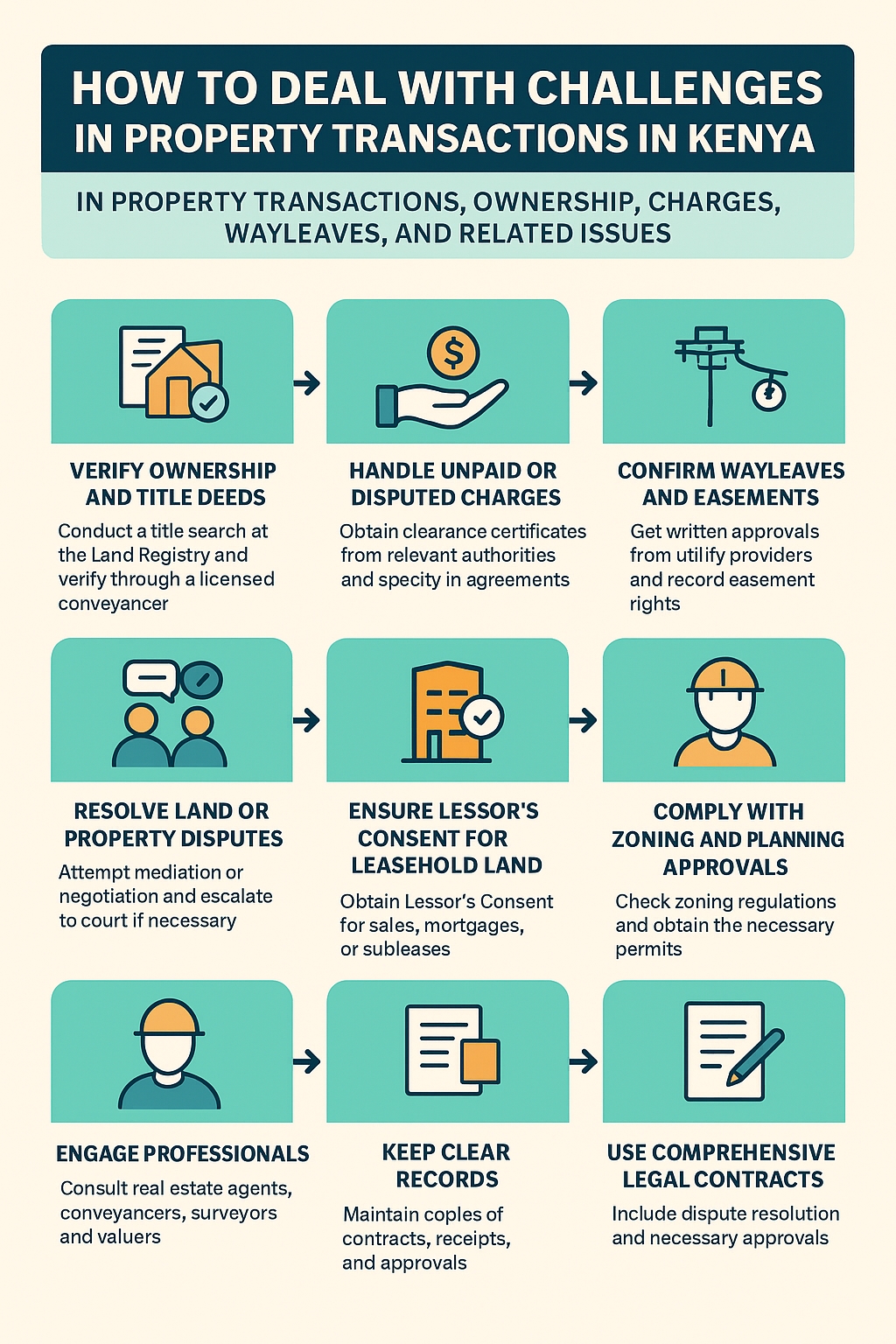
How to Deal with Challenges in Property Transactions, Ownership, Charges, Wayleaves, and Related Issues in Kenya
Property ownership and transactions in Kenya are exciting opportunities for investment, but they often come with complex challenges. Issues such as unclear ownership, unpaid charges, disputes over wayleaves, zoning restrictions, and leasehold approvals can complicate property transfers and developments. This comprehensive guide explains these challenges and provides practical solutions for buyers, sellers, investors, and developers.
1. Verify Ownership and Title Deeds
Why it matters: Disputes over land ownership are among the most common problems in Kenyan real estate. In some cases, multiple parties claim ownership of the same property, or the title deed is forged or incomplete.
How to address it:
-
Conduct a title search at the Land Registry to confirm the registered owner.
-
Check for encumbrances, mortgages, caveats, or liens that may affect the property.
-
Use a licensed conveyancer or lawyer to verify the authenticity of all documents.
-
Example: A buyer purchased a plot in Nairobi only to find it had an unpaid mortgage. Verifying the title beforehand would have prevented a legal dispute.
Tips: Always request the original title deed and cross-check with Land Registry records before finalizing any deal.
2. Handle Unpaid or Disputed Charges
Challenges: Outstanding payments for local government rates, service charges, or utility bills can delay property transfers. Failure to address these charges can lead to disputes with local authorities or management companies.
Solutions:
-
Obtain a clearance certificate from the relevant authority showing all dues are settled.
-
Include clauses in the sale or transfer agreement requiring the seller to pay all outstanding charges before completion.
-
Consider using an escrow account to hold funds until all dues are cleared.
3. Confirm Wayleaves and Easements
What are they? Wayleaves are rights granted for utility companies to install or maintain electricity, water, sewer, or telecom lines across a property. Easements allow access to land for specific purposes.
Common issues:
-
Utility companies may require consent before installing infrastructure.
-
Neighbors or local authorities may dispute easement rights.
How to resolve:
-
Obtain written approvals from utility providers for any installations.
-
Ensure easements are documented in the title deed.
-
Engage a surveyor to demarcate and map any affected areas.
Tip: Always check for existing wayleaves before buying a property, especially in urban and high-density areas.
4. Resolve Land or Property Disputes
Challenges: Disputes may arise from:
-
Conflicting ownership claims
-
Boundary disagreements with neighbors
-
Unauthorized developments
Solutions:
-
Start with alternative dispute resolution (ADR): mediation or negotiation.
-
Involve community land committees, elders, or respected mediators for informal resolution.
-
If unresolved, escalate to court or tribunal. Document all communications and agreements.
Example: A boundary dispute in Kiambu was resolved after mediation by the local land committee, saving the parties legal costs and delays.
5. Ensure Lessor’s Consent for Leasehold Land
What is it? Lessor’s Consent is the approval from the landowner allowing a leaseholder to transfer, sublease, or mortgage leasehold land.
Why it matters: In Kenya, transactions on leasehold land cannot legally proceed without this consent.
Steps:
-
Submit a formal application with a licensed conveyancer.
-
Include lease documents, transaction details, and payment of prescribed fees.
-
Follow up with the landowner or approving authority (County Government, Trust Land Committee, or National Land Commission).
Tip: Plan ahead, as obtaining consent may take several weeks.
6. Comply with Zoning and Development Approvals
Challenges: Zoning regulations can restrict land use, building height, or type of development. Ignoring zoning rules can result in fines, demolition, or blocked transactions.
How to address:
-
Confirm the property’s zoning status at the local county planning office.
-
Obtain all building permits, development approvals, and change-of-use permissions.
-
Hire a town planner for large or complex projects to ensure compliance.
Example: Attempting to build a commercial mall in a residential zone in Nairobi without approval led to a stop-order from the county.
7. Engage Professionals Early
Why it matters: Many challenges arise from poor planning or lack of expertise.
Professionals to consult:
-
Licensed real estate agents for market insight
-
Conveyancers and lawyers for legal documentation
-
Surveyors for accurate property boundaries
-
Valuers for fair property pricing
Tip: Professional guidance reduces the risk of legal disputes and ensures compliance with Kenyan property laws.
8. Keep Clear Records
Challenge: Missing or inconsistent documentation can stall property transfers.
Solution:
-
Keep copies of all agreements, receipts, approvals, and correspondences.
-
Digitize documents for easy access and sharing.
-
Maintain records for future reference, especially for resale or mortgage purposes.
9. Address Utility Installation and Charges
Challenge: Disputes may arise regarding who pays for electricity, water, or telecom installations.
Solutions:
-
Clarify responsibility in sale or lease agreements.
-
Negotiate shared costs if multiple parties benefit.
-
Request invoices and official receipts from utility providers.
10. Use Comprehensive Legal Contracts
Why it matters: Ambiguity in contracts leads to disputes and financial loss.
Best practices:
-
Clearly outline rights, obligations, timelines, and payments.
-
Include dispute resolution clauses, such as mediation or arbitration.
-
Specify approvals needed, like Lessor’s Consent, zoning clearance, and wayleaves.
-
Always have the contract reviewed by a lawyer before signing.
FAQs on Property Transactions in Kenya
Q1. How do I confirm property ownership?
A1. Conduct a title search at the Kenya Land Registry and verify documents with a licensed conveyancer.
Q2. Can I buy property with unpaid charges?
A2. Yes, but ensure all outstanding payments are settled before the transaction to avoid future disputes.
Q3. What is a wayleave?
A3. A legal permission for utility providers to install or maintain infrastructure across the property.
Q4. Is Lessor’s Consent mandatory for leasehold land?
A4. Yes, for sales, subleases, or mortgages. Without it, the transaction is illegal.
Q5. How do I handle disputes with neighbors over property boundaries?
A5. Begin with negotiation or mediation, escalate to community elders or the land tribunal if necessary.
Q6. How long does property registration take in Kenya?
A6. Typically 4–8 weeks if documentation is complete and approved.
Q7. Can I transfer property without professional help?
A7. Possible, but it increases the risk of errors, legal disputes, and delays.
Q8. What should a property contract include?
A8. Ownership details, payment terms, dispute resolution, approvals, obligations, and transaction timelines.
Q9. Are wayleaves required for all utilities?
A9. Yes, for electricity, water, sewer, and telecom lines. Written approvals are necessary.
Q10. Who pays for utility installations?
A10. The party responsible should be defined in the sale, lease, or development agreement.
Key Takeaways
-
Verify ownership before any transaction.
-
Clear all charges and dues to avoid disputes.
-
Ensure wayleaves, easements, and zoning compliance.
-
Obtain all approvals, including Lessor’s Consent for leasehold land.
-
Engage professionals like agents, lawyers, and valuers for smooth transactions.
-
Maintain clear documentation and use comprehensive contracts.
Proper planning, legal compliance, and professional guidance are the keys to smooth, secure, and successful property transactions in Kenya.

- Prime Properties for Sale in Kenya – Apartments, Houses, Land & Investment Opportunities March 20, 2026
- Impact of Climate and Environmental Factors on Property Values in Kenya March 17, 2026
- Land Valuation in Kenya: Process, Costs & What Affects Your Property Value (2026 Guide) March 17, 2026
- What Determines Property Value in Kenya? How Location Drives 70% of Land & House Prices March 11, 2026
- Why Property Values Rise Around New Highways, Bypasses & Infrastructure Projects in Kenya March 11, 2026
Our Fact Checking Process
We prioritize accuracy and integrity in our content. Here's how we maintain high standards:
- Expert Review: All articles are reviewed by subject matter experts.
- Source Validation: Information is backed by credible, up-to-date sources.
- Transparency: We clearly cite references and disclose potential conflicts.
Your trust is important. Learn more about our Fact Checking process and editorial policy.
Our Review Board
Our content is carefully reviewed by experienced professionals to ensure accuracy and relevance.
- Qualified Experts: Each article is assessed by specialists with field-specific knowledge.
- Up-to-date Insights: We incorporate the latest research, trends, and standards.
- Commitment to Quality: Reviewers ensure clarity, correctness, and completeness.
Look for the expert-reviewed label to read content you can trust.



Join The Discussion