
 by
by 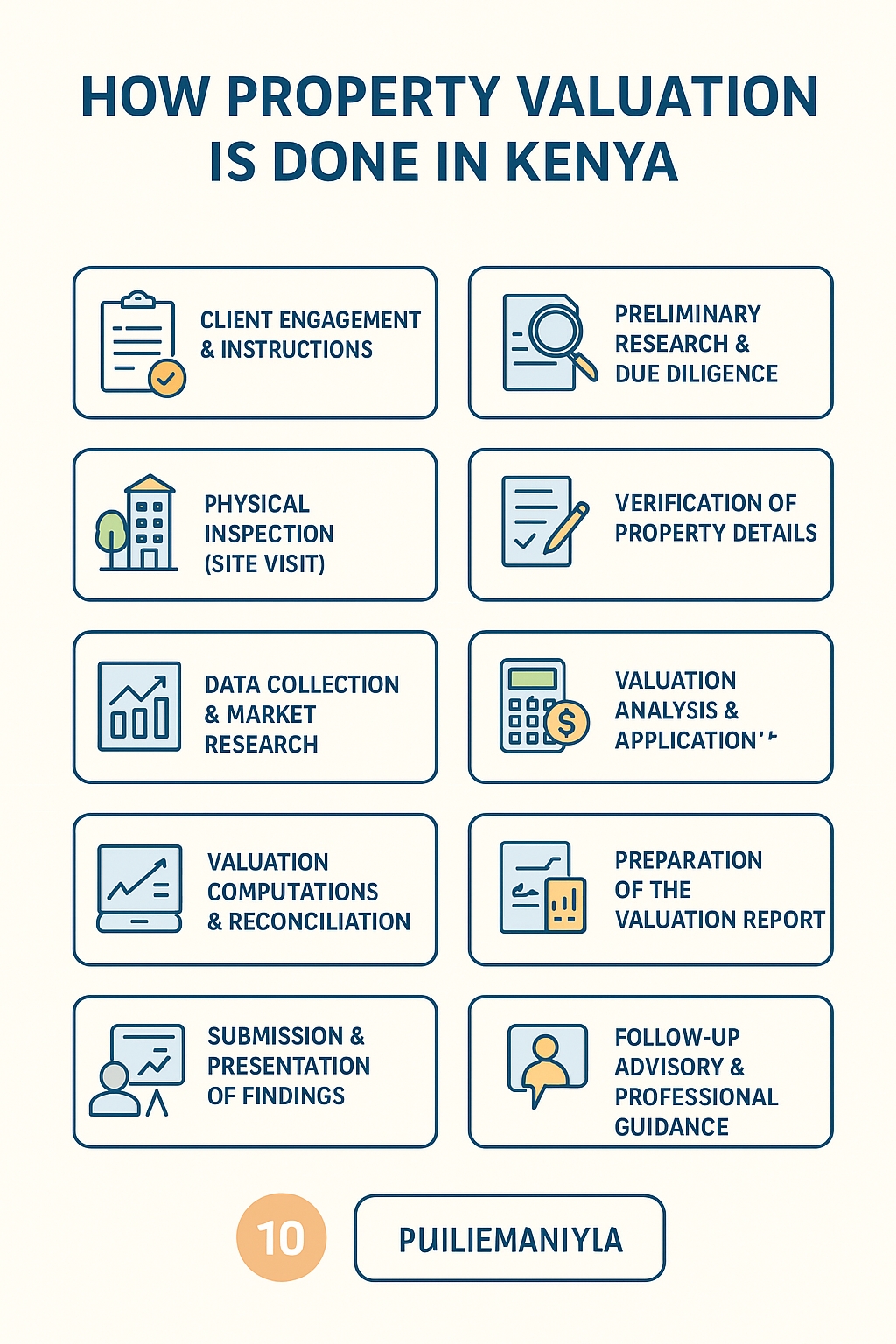
How Property Valuation Is Done in Kenya: Step-by-Step Guide
Property valuation is one of the most important processes in real estate. Whether you’re buying, selling, financing, investing, insuring, or developing land or buildings, you need an accurate and independent assessment of the property’s worth. In Kenya, valuation plays a central role in banking, insurance, taxation, accounting, and investment decisions.
This 2025 guide breaks down how property valuation is done in Kenya—step by step—and explains what valuers look for, how they determine value, and what property owners should expect during the process.
What Is Property Valuation?
Property valuation is a professional assessment of the Market Value, Insurance Value, Forced Sale Value, Mortgage Value, or any other basis of value, performed by a Registered and Practicing Valuer.
In Kenya, valuers must be:
-
Registered by the Valuers Registration Board (VRB)
-
Members of the Institution of Surveyors of Kenya (ISK)
-
Licensed to practice valuation
They follow standards including:
-
Kenya Valuation Standards (KVS)
-
International Valuation Standards (IVS)
-
RICS Red Book (where applicable)
Why Property Valuation Matters
Valuation is needed for:
-
Buying and selling
-
Bank loans & mortgages
-
Insurance
-
Financial reporting
-
Investment analysis
-
Probate & court matters
-
Forced-sale & auction purposes
-
Taxation (Stamp Duty, Capital Gains Tax)
Each purpose requires a specific basis of value and a standardized process.
How Property Valuation Is Done in Kenya: Step-by-Step
Below is a complete breakdown of the valuation process from start to finish.
1. Client Engagement & Instructions
The valuation assignment begins when the client formally engages the valuer.
This step includes:
-
Defining the purpose of valuation
-
Identifying the property
-
Agreeing on fees and timeline
-
Confirming the valuation basis (Market Value, Insurance Value, etc.)
-
Receiving initial documents such as:
-
Title deed
-
Deed plans
-
Survey maps
-
Lease documents
-
Architectural plans
-
Asset register
-
Why this matters:
The purpose determines the approach, assumptions, and reporting format.
2. Preliminary Research & Due Diligence
Before visiting the site, the valuer performs background checks.
These may include:
-
Confirming property ownership
-
Reviewing zoning regulations
-
Checking land use and planning restrictions
-
Studying neighbourhood characteristics
-
Reviewing market trends and comparable sales
-
Checking for caveats or encumbrances (if required)
Why this matters:
Due diligence ensures the valuer works with correct, verified information.
3. Physical Inspection (Site Visit)
This is the most critical stage in the valuation process.
During inspection, the valuer examines:
For Land
-
Location
-
Accessibility & road frontage
-
Size and shape
-
Topography
-
Soil quality
-
Availability of utilities (water, electricity, sewer)
-
Environmental conditions
-
Surrounding developments
-
Zoning and planning compliance
For Residential, Commercial, or Industrial Buildings
-
Structural condition
-
Type of construction
-
Materials used
-
Finishes
-
Age of building
-
Functional layout
-
Number of floors and rooms
-
Amenities (parking, lifts, security, etc.)
-
Occupancy rate
-
Evidence of defects, wear & tear
-
Compliance with building codes
Photographs are taken for:
-
Documentation
-
Bank/Court evidence
-
Report attachments
4. Verification of Property Details
After inspection, the valuer verifies the property’s legal and physical details.
Verification includes:
-
Checking title deed details
-
Confirming site boundaries (sometimes with survey maps)
-
Matching property measurements with deed plans
-
Clarifying ownership and tenure
-
Checking lease terms (for leasehold properties)
-
Confirming rental income (for investment properties)
This ensures the final report is based on accurate, verified information.
5. Data Collection & Market Research
The valuer investigates the current market data relevant to the property type.
Market research includes:
-
Comparable property sales
-
Asking prices in the area
-
Historical price trends
-
Rental yields
-
Occupancy rates
-
Cost of construction
-
Infrastructure developments
-
Demand & supply indicators
Valuers rely on:
-
Property databases
-
Agent reports
-
County records
-
Institutional transactions
-
Professional networks
6. Valuation Analysis & Application of Approaches
After collecting all relevant data, the valuer applies recognized valuation methods.
The three main valuation approaches used in Kenya are:
i. The Market (Sales Comparison) Approach
Used for:
-
Residential properties
-
Land
-
Small commercial units
Method:
-
Identify comparable properties
-
Adjust for differences (size, location, condition, amenities)
-
Arrive at a fair Market Value
ii. The Cost Approach (Replacement/Reproduction Method)
Used for:
-
New or special-purpose buildings
-
Industrial & institutional properties
-
Insurance valuation
Method:
-
Determine cost of constructing a similar building
-
Deduct depreciation (physical, functional, economic)
-
Add land value
iii. The Income Approach
Used for:
-
Rentals (commercial, residential, mixed-use)
-
Offices
-
Warehouses
-
Hotels
Method:
-
Analyze rental income
-
Deduct expenses to determine net income
-
Apply yield/ capitalization rate
-
Arrive at Market Value
7. Valuation Computations & Reconciliation
The valuer integrates all data and models to produce a final value.
This includes:
-
Calculating land value
-
Calculating building value
-
Adjusting for depreciation
-
Applying market comparables
-
Reconciling differences between approaches
-
Considering risk factors
-
Documenting assumptions and limitations
A conclusion is made based on the most reliable and defensible figure.
8. Preparation of the Valuation Report
After arriving at a final figure, the valuer prepares a detailed valuation report.
The report includes:
-
Applicant details
-
Property description
-
Purpose of valuation
-
Tenure and ownership
-
Location & neighborhood analysis
-
Site and building details
-
Valuation methodology
-
Comparable sales and research data
-
Final value conclusion
-
Photographs
-
Maps and plans
-
Assumptions
-
Limiting conditions
-
Declaration of independence
The report must meet professional, legal, and ethical standards.
9. Submission & Presentation of Findings
The report is submitted to:
-
Banks
-
Insurers
-
Clients
-
Lawyers
-
Courts
-
Government bodies
Where necessary, valuers:
-
Clarify technical details
-
Present findings in meetings
-
Provide advisory insights
10. Follow-Up Advisory & Professional Guidance
A good valuer does not just give a figure. They help the client understand:
-
Market trends
-
Best strategies for selling or buying
-
Investment risks
-
Development potential
-
Insurance adequacy
-
Lending feasibility
-
Compliance issues
This step adds value beyond the numerical assessment.
How Long Does Valuation Take in Kenya?
The timeline depends on:
-
Property type
-
Availability of documents
-
Location
-
Purpose of valuation
Typical duration:
-
Residential houses: 1–2 days
-
Land: 1–3 days
-
Commercial buildings: 2–5 days
-
Industrial complexes: 5–10 days
-
Large estates: Up to 30 days
How Much Does Property Valuation Cost in Kenya?
Valuers follow the Valuers Act Cap 532 (Legal Notice 94) which outlines official scale of fees.
Typical fees range between:
-
0.25% to 1% of the property value
-
Subject to minimum charges
Internal/advisory/desktop valuations may be charged at negotiated rates.
Common Challenges During Valuation
Valuers often encounter:
-
Missing title deeds
-
Boundary disputes
-
Poor building records
-
Inaccurate property measurements
-
Outdated rental data
-
Encumbrances & caveats
-
Unauthorized developments
-
Poor access roads
Resolving these issues helps protect clients from legal and financial risk.
Property valuation in Kenya is a structured, standardized, and professionally guided process that ensures accuracy, transparency, and fairness in real estate transactions. Whether you’re a buyer, seller, investor, lender, insurer, or developer, understanding this process helps you make informed and confident decisions.
A credible valuation is more than just a number—it is an expert opinion backed by research, methodology, and professional integrity.

Our Fact Checking Process
We prioritize accuracy and integrity in our content. Here's how we maintain high standards:
- Expert Review: All articles are reviewed by subject matter experts.
- Source Validation: Information is backed by credible, up-to-date sources.
- Transparency: We clearly cite references and disclose potential conflicts.
Your trust is important. Learn more about our Fact Checking process and editorial policy.
Our Review Board
Our content is carefully reviewed by experienced professionals to ensure accuracy and relevance.
- Qualified Experts: Each article is assessed by specialists with field-specific knowledge.
- Up-to-date Insights: We incorporate the latest research, trends, and standards.
- Commitment to Quality: Reviewers ensure clarity, correctness, and completeness.
Look for the expert-reviewed label to read content you can trust.



Join The Discussion