
 by
by 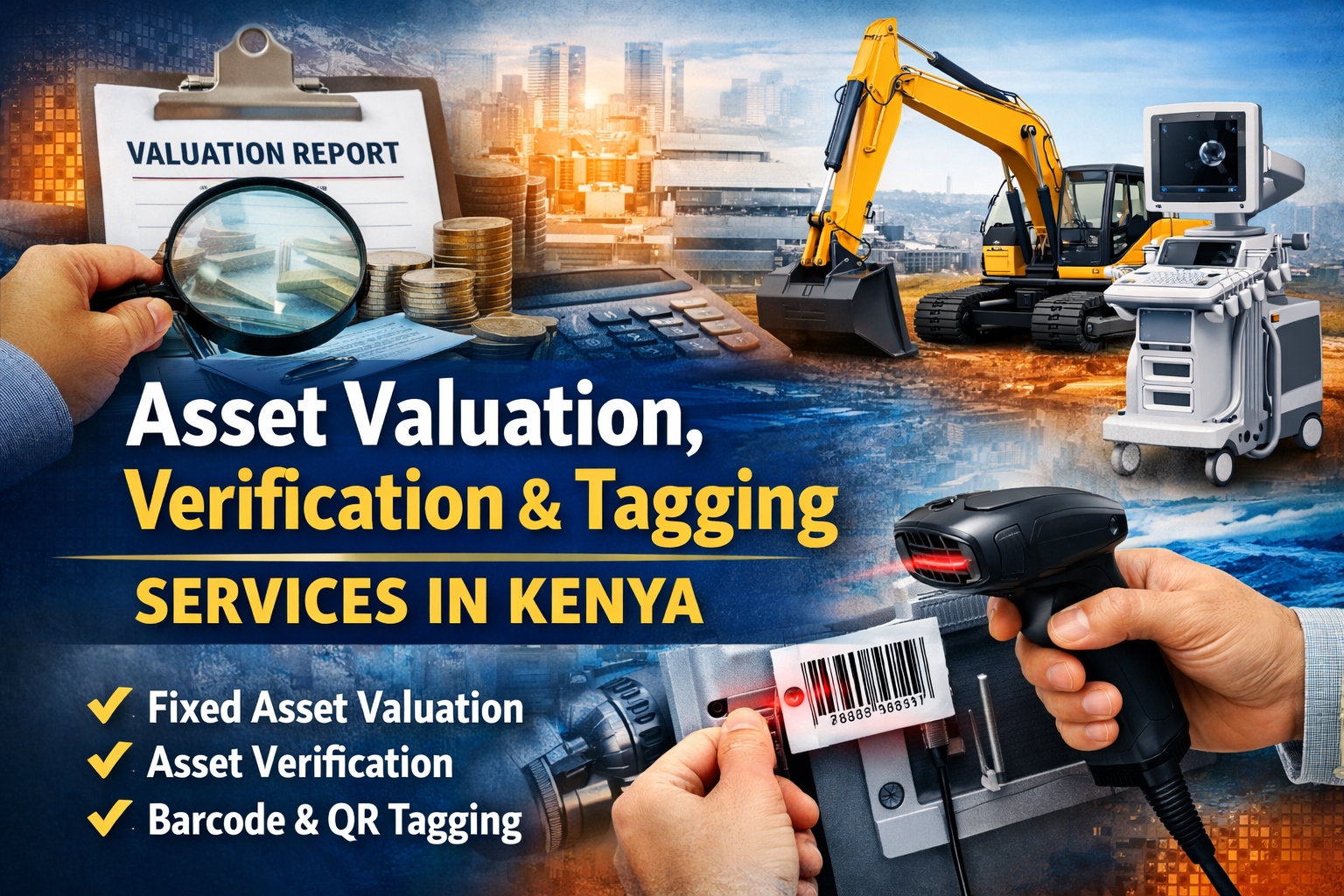
Asset Tagging Services & Verification in Kenya
Organizations across Kenya are increasingly investing in asset tagging as a practical solution for strengthening accountability, improving audit readiness, and reducing asset losses. Whether you are a corporate entity, NGO, government institution, SACCO, school, or manufacturing company, having an accurate and traceable asset register is no longer optional—it is essential.
Asset tagging is now a critical part of asset management systems, helping organizations confirm ownership, track movement, detect ghost assets, and maintain reliable financial reporting. With rising audit scrutiny and increased operational decentralization, many institutions are now outsourcing asset tagging services in Kenya to professional firms for accuracy, credibility, and compliance.
This guide explains what asset tagging is, why it matters, how the process works, what technologies are used, and what to expect when engaging professionals.
What Are Asset Tagging Services?
Asset tagging is the process of physically labeling fixed assets using unique identification tags and linking those tags to an asset register. Each tag contains a unique code that corresponds to specific asset details such as:
-
asset description
-
serial number
-
location
-
department/user
-
purchase date
-
cost and value
-
asset condition
-
depreciation category
The objective is to ensure every asset can be verified, tracked, and reconciled against financial records.
Asset tagging is often carried out alongside:
-
fixed asset verification
-
asset register updates
-
asset valuation services
-
reconciliation of missing or idle assets
-
audit compliance reviews
In Kenya, asset tagging is commonly applied to both movable and immovable fixed assets.
What is Asset Verification
Asset verification is the physical inspection and confirmation of an organization’s fixed assets to ensure they exist, are correctly recorded, and are in the right condition and location. It involves matching assets on the register against what is available on the ground by checking details such as serial numbers, descriptions, asset users, departments, and operational status.
The exercise helps organizations identify missing assets, unrecorded assets, obsolete items, and incorrectly captured information in the fixed asset register. Asset verification is commonly carried out for audit compliance, internal control improvement, insurance purposes, donor reporting, and preparation for disposal or valuation.
A properly conducted asset verification exercise strengthens accountability, reduces the risk of asset loss or fraud, and ensures accurate financial reporting and asset management decision-making.
Why Asset Tagging Is Important for Organizations in Kenya
Asset tagging is not simply a labeling exercise—it is a strong internal control tool.
1. Preventing Loss, Theft, and Misuse
Many institutions lose valuable assets due to poor tracking. Tagged assets reduce the risk of:
-
theft
-
unauthorized relocation
-
misuse
-
duplication in registers
A tagged asset is harder to dispose of informally because it is traceable.
2. Eliminating Ghost Assets in the Register
One of the most common issues during audits is the presence of assets in the register that do not exist physically. These are often referred to as:
-
ghost assets
-
obsolete assets
-
missing assets
Asset tagging and verification ensures that only existing assets appear in your books.
3. Improving Audit Compliance and Financial Reporting
Auditors increasingly demand strong supporting evidence for fixed assets. A professional asset tagging exercise improves credibility in:
-
annual financial audits
-
donor reporting
-
government compliance audits
-
IFRS financial reporting
Organizations seeking transparency often request fixed asset verification and tagging services in Kenya to meet audit requirements.
4. Enhancing Asset Management and Decision-Making
Once assets are tagged and recorded accurately, management can make better decisions regarding:
-
asset replacement planning
-
maintenance scheduling
-
budgeting for procurement
-
disposal planning
This improves overall efficiency and reduces unnecessary capital expenditure.
5. Supporting Insurance and Risk Management
Asset tagging supports insurance claims by providing verifiable asset identification, which is especially useful for:
-
fire claims
-
theft claims
-
flood damage claims
Tagged assets make insurance reporting and replacement planning easier.
What Types of Assets Can Be Tagged?
Asset tagging applies to a wide range of assets including:
Office & Administrative Assets
-
desktops, laptops, printers
-
photocopiers and scanners
-
furniture (tables, chairs, cabinets)
-
safes and filing systems
ICT and Technology Equipment
-
servers and networking devices
-
CCTV systems and security equipment
-
access control systems
-
telecom equipment
Vehicles and Transport Assets
-
company vehicles
-
motorcycles
-
forklifts and loaders
-
trailers
Plant, Machinery & Equipment
-
generators
-
factory machinery
-
production lines
-
compressors and pumps
Medical and Laboratory Equipment
-
X-ray machines
-
lab analyzers
-
dialysis machines
-
theatre equipment
Institutional Assets (Schools, NGOs, Government)
-
learning equipment
-
donated assets
-
conference equipment
-
field assets in multiple locations
Asset Tagging Methods Used in Kenya
Organizations in Kenya typically choose between the following tagging methods depending on budget and operational requirements:
1. Barcode Asset Tags
These are the most common and affordable.
Benefits:
-
cost-effective
-
easy to scan
-
fast asset identification
Suitable for:
-
schools, offices, NGOs, corporates
2. QR Code Tags
QR tags allow more information storage and quick scanning using smartphones.
Benefits:
-
can include detailed asset data
-
easy mobile scanning
-
modern asset tracking system integration
Suitable for:
-
institutions with multiple departments and mobile asset movement
3. RFID Tags (Radio Frequency Identification)
RFID is used for advanced tracking.
Benefits:
-
no direct scanning needed
-
faster inventory audits
-
can track asset movement in real time (depending on setup)
Suitable for:
-
warehouses, manufacturing plants, logistics firms
4. Engraving / Metal Plate Tags
These are used for heavy-duty assets exposed to harsh environments.
Benefits:
-
long-lasting
-
resistant to heat, oil, and dust
Suitable for:
-
factories, plant equipment, outdoor installations
Fixed Asset Verification in Kenya: What It Means
Asset tagging is usually done together with fixed asset verification. Verification involves physically confirming:
-
existence of the asset
-
correct location
-
serial number accuracy
-
asset condition
-
asset custodian/user
Fixed asset verification is essential when preparing for:
-
annual audits
-
donor-funded project reporting
-
insurance valuation
-
merger/acquisition due diligence
-
asset disposal planning
Many clients searching online for asset verification services in Kenya are typically preparing for audits or institutional restructuring.
The Asset Tagging Process (Step-by-Step)
A professional asset tagging project is conducted in a structured manner to ensure accuracy.
Step 1: Project Planning and Scope Definition
The service provider confirms:
-
number of assets
-
number of sites/branches
-
asset categories
-
reporting requirements
-
tagging method (barcode, QR, RFID)
This step ensures cost and timelines are well defined.
Step 2: Review of Existing Asset Register
The team reviews your current asset register to identify gaps such as:
-
missing serial numbers
-
duplicate asset entries
-
assets without location details
-
inconsistent descriptions
This helps streamline the verification exercise.
Step 3: Physical Verification and Asset Identification
Professionals physically inspect assets and capture details such as:
-
asset type
-
make/model
-
serial number
-
department/location
-
condition assessment
This stage is critical in detecting missing assets or unrecorded assets.
Step 4: Tagging and Label Application
Asset tags are printed and attached securely to the asset.
Depending on asset type, tags may be:
-
adhesive barcode labels
-
metal tags riveted to machinery
-
tamper-proof tags for electronics
Step 5: Asset Coding and Database Updating
Each tagged asset is assigned a unique code. The data is then uploaded into a structured register.
Some clients request tagging aligned to internal departmental codes such as:
-
finance codes
-
procurement codes
-
cost center codes
Step 6: Asset Register Reconciliation
At this stage, the register is updated to show:
-
verified assets
-
missing assets
-
obsolete assets
-
unrecorded assets discovered during inspection
-
damaged assets requiring disposal
This forms a reliable final output for management.
Step 7: Reporting and Final Deliverables
The final deliverables usually include:
-
updated fixed asset register (Excel or system-ready format)
-
tagging schedule
-
verification report summary
-
exception report (missing/obsolete assets)
-
asset condition report
-
recommendations for asset management improvements
Organizations requiring audit-ready reports often request signed documentation.
Key Outputs of Asset Tagging Services in Kenya
A professional asset tagging assignment should deliver more than tags. The real value is in documentation.
Typical outputs include:
Updated Fixed Asset Register
A cleaned and reconciled register containing:
-
asset tag number
-
asset description
-
serial number
-
purchase date
-
acquisition cost
-
location
-
department
-
condition
-
custodian
-
remarks
Asset Condition Assessment Report
Assets are categorized as:
-
good condition
-
fair condition
-
poor condition
-
obsolete / damaged
-
recommended for disposal
This helps management plan replacements.
Missing Asset Report
Lists assets in books that were not physically traced.
Unrecorded Asset Report
Lists assets physically found but missing from the register—common in institutions with decentralized procurement.
Industries Commonly Seeking Asset Tagging in Kenya
Asset tagging is widely demanded across sectors including:
Government Institutions
-
ministries and departments
-
county governments
-
parastatals
-
public agencies
NGOs and Donor-Funded Programs
Donors often require strict accountability for funded assets.
Banks, SACCOs & Financial Institutions
Asset tagging supports compliance and branch asset accountability.
Schools, Colleges and Universities
Institutions with multiple campuses require asset verification and tagging to control losses.
Hospitals and Medical Facilities
Medical equipment is high-value and requires tracking for both compliance and insurance.
Manufacturing and Industrial Companies
Plant and machinery are expensive and need accurate records for audits and insurance.
Asset Tagging and Asset Valuation: What’s the Difference?
This is a common online question.
-
Asset tagging focuses on identification and tracking.
-
Asset valuation focuses on determining the monetary value of assets.
Many clients request a combined service:
1. fixed asset verification and tagging
2. plant and machinery valuation
3. insurance replacement cost valuation
4. asset register update and valuation
This is particularly common for corporates preparing for audit or insurance renewal.
How Much Do Asset Tagging Services Cost in Kenya?
“asset tagging services cost in Kenya”
Pricing varies depending on:
-
number of assets
-
type of tags required
-
number of branches/sites
-
complexity of asset categories
-
whether valuation is required
-
whether depreciation schedules must be updated
Typical Pricing Structure
Many firms quote based on:
-
cost per asset tagged
-
cost per location/site visit
-
project-based lump sum
Small assignments may start from KES 50,000, while large multi-site projects may cost significantly more depending on scope.
For institutions with thousands of assets, pricing is usually negotiated based on volume.
How Long Does Asset Tagging Take in Kenya?
Duration depends on asset volume and locations.
Typical timelines:
-
small office (100–300 assets): 3–7 days
-
medium institution (500–2,000 assets): 1–3 weeks
-
large multi-branch organization (5,000+ assets): 3–8 weeks
Projects with asset tagging plus valuation may take longer due to inspection requirements.
Common Challenges in Asset Tagging Projects (Kenya Context)
Organizations often face challenges such as:
1. Missing Serial Numbers
Some equipment has worn-out labels, requiring manual identification.
2. Asset Movement Between Departments
Assets may have been transferred without documentation, causing discrepancies.
3. Assets Stored in Remote Locations
Institutions with field offices often require additional verification time.
4. Unrecorded Donor Assets
Donations may not be properly recorded in the asset register.
5. Obsolete Assets Still in Books
Old computers, broken furniture, or outdated machinery often remains in records long after disposal.
Professional asset tagging resolves these issues by producing clear exception reports.
What to Look for When Hiring an Asset Tagging Company in Kenya
When searching online for professional asset tagging firms in Kenya, consider the following:
1. Ability to Handle Multi-Site Projects
A competent firm should manage assets across multiple counties and branches.
2. Quality of Tags Used
Tags should be durable, tamper-proof, and suitable for the environment (heat, dust, machinery oils, etc.).
3. Data Accuracy and Reporting Quality
The updated register must be clean, structured, and audit-ready.
4. Integration with Your Systems
Some organizations require compatibility with ERP systems like:
-
SAP
-
Oracle
-
QuickBooks
-
Microsoft Dynamics
5. Confidentiality and Professionalism
Asset records are sensitive. Ensure professional handling of data.
Frequently Asked Questions (FAQs): Asset Tagging Services Kenya
1. What is asset tagging in Kenya?
Asset tagging is the process of labeling assets with unique identification tags and updating the asset register for tracking, audit, and accountability purposes.
2. Why do organizations do fixed asset verification and tagging?
To confirm existence of assets, reduce theft, eliminate ghost assets, improve audits, and update asset registers.
3. Can asset tagging be used for insurance?
Yes. It helps support insurance schedules and replacement cost assessments.
4. What types of tags are used?
Common tags include barcode tags, QR code tags, RFID tags, and metal engraving plates for machinery.
5. Is asset tagging required for audits?
Auditors often recommend verification and tagging, especially where asset registers are outdated or inconsistent.
6. How long does an asset tagging project take?
It depends on asset numbers and site locations. Small projects may take a few days, while large institutions may take several weeks.
7. Can asset tagging help prevent fraud?
Yes. Tagging makes assets traceable and reduces unauthorized movement and loss.
8. Do asset tagging companies update asset registers?
Yes. Most professional service providers deliver an updated asset register as part of the final report.
9. Is asset tagging only for big companies?
No. SMEs, schools, NGOs, and even small offices can benefit from asset tagging.
10. Can you tag machinery and heavy equipment?
Yes. Specialized industrial tags and metal plates are used for plant, machinery, and equipment.
Why Asset Tagging in Kenya Is a Smart Investment
Asset tagging services in Kenya have become a vital part of modern asset management. From corporates and government institutions to NGOs and SMEs, tagging improves accountability, strengthens internal controls, supports audit compliance, and reduces asset losses.
A properly tagged and verified asset register ensures that management decisions are based on accurate records, and it helps institutions prepare for audits, insurance renewals, disposal planning, and financial reporting.
For organizations with multiple branches, donor-funded assets, or high-value equipment, professional asset tagging provides clarity and long-term operational value.
Need Professional Asset Tagging Services in Kenya?
If your organization requires fixed asset verification, asset tagging, asset register update, and reconciliation, engaging professional consultants ensures the exercise is conducted accurately, efficiently, and in an audit-ready format.

Our Fact Checking Process
We prioritize accuracy and integrity in our content. Here's how we maintain high standards:
- Expert Review: All articles are reviewed by subject matter experts.
- Source Validation: Information is backed by credible, up-to-date sources.
- Transparency: We clearly cite references and disclose potential conflicts.
Your trust is important. Learn more about our Fact Checking process and editorial policy.
Our Review Board
Our content is carefully reviewed by experienced professionals to ensure accuracy and relevance.
- Qualified Experts: Each article is assessed by specialists with field-specific knowledge.
- Up-to-date Insights: We incorporate the latest research, trends, and standards.
- Commitment to Quality: Reviewers ensure clarity, correctness, and completeness.
Look for the expert-reviewed label to read content you can trust.



Join The Discussion